


Suffolk Sheep: Characteristics, Origin and Meat Production
April 5, 2026
Diarrhea in Sheep: Causes, Treatment and Home Remedies
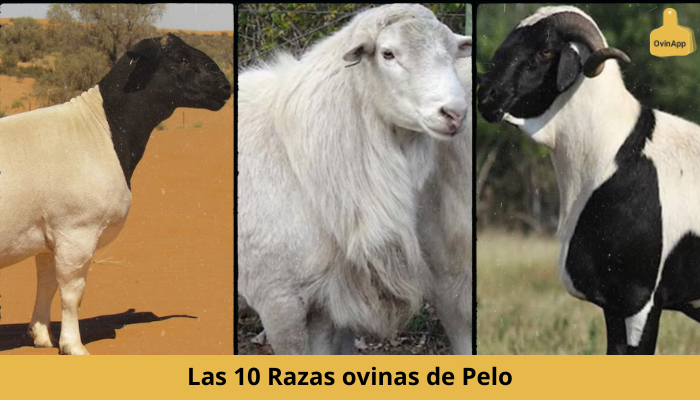
April 5, 2026Hair sheep breeds are increasingly popular among producers worldwide, especially in tropical, subtropical and arid regions. Unlike wool breeds, hair sheep shed their coat naturally, require no shearing, and tend to be more resistant to heat and internal parasites — making them ideal for low-input production systems.
In this guide we compare the 10 best hair sheep breeds for meat production, covering their characteristics, origin, advantages and ideal environments.
What Are Hair Sheep?
Hair sheep are breeds that grow a coat of hair rather than wool. They typically shed their coat seasonally without human intervention. Key advantages over wool breeds include:
- No shearing required — lower labor and costs
- Better heat and humidity tolerance
- Greater resistance to internal parasites (especially Haemonchus contortus)
- High reproductive efficiency in year-round breeding systems
- Lean, mild-flavored meat with no lanolin odor
1. Dorper
The Dorper was developed in South Africa by crossing Dorset Horn with Blackhead Persian sheep. It is now one of the world’s most widely raised meat breeds.
- Origin: South Africa
- Adult weight: Rams 90–120 kg, ewes 60–80 kg
- ADG: Up to 400 g/day under good management
- Strengths: Exceptional adaptability, heat and drought tolerance, excellent carcass quality
- Best for: Arid and semi-arid zones, extensive systems
2. Katahdin
The Katahdin was developed in the United States (Maine) in the 1950s–70s using St. Croix, Wiltshire Horn, and British meat breed genetics.
- Origin: United States
- Adult weight: Rams 80–125 kg, ewes 55–80 kg
- Prolificacy: 150–180%
- Strengths: Excellent maternal ability, parasite resistance, adapts well to humid climates
- Best for: Pasture-based systems in temperate to subtropical zones
3. Santa Ines (Santa Inez)
The Santa Ines is a Brazilian breed developed from crosses between Bergamasca, Morada Nova and other breeds. It is the most important hair breed in Brazil.
- Origin: Brazil
- Adult weight: Rams 80–120 kg, ewes 50–80 kg
- Prolificacy: Up to 200% in some flocks
- Strengths: Outstanding heat tolerance, high parasite resistance, year-round breeding
- Best for: Tropical and semi-arid regions, especially Northeast Brazil and similar climates
4. Pelibuey
The Pelibuey (also spelled Peliguey) is one of the most important hair breeds in Latin America, especially in Mexico, Cuba and Central America. It descended from West African sheep brought during the colonial period.
- Origin: Cuba / Mexico (West African ancestry)
- Adult weight: Rams 50–80 kg, ewes 35–55 kg
- Strengths: Extreme heat tolerance, very low production costs, excellent adaptation to tropical forage
- Best for: Tropical lowlands, low-input systems
5. Blackhead Persian (Karakul / Swartkoppersie)
The Blackhead Persian is a fat-tailed breed from East Africa and the Middle East. It is one of the parent breeds of the Dorper and is valued for its extreme hardiness.
- Origin: East Africa / Middle East
- Adult weight: Rams 50–70 kg, ewes 35–55 kg
- Strengths: Exceptional drought tolerance, survives on very poor pasture, fat tail as energy reserve
- Best for: Arid and hyper-arid zones
6. St. Croix (Virgin Island White)
The St. Croix originated on the island of St. Croix in the US Virgin Islands. It is an important parent breed in the development of the Katahdin and is known for its parasite resistance.
- Origin: US Virgin Islands
- Adult weight: Rams 70–90 kg, ewes 45–65 kg
- Strengths: Among the highest parasite-resistant breeds known, excellent for humid tropics
- Best for: Island or humid tropical environments
7. Morada Nova
The Morada Nova is a small but highly adapted Brazilian hair breed. It comes in two varieties: red (vermelha) and white (branca). It is one of the most heat-resistant breeds in the world.
- Origin: Northeast Brazil
- Adult weight: Rams 35–50 kg, ewes 25–40 kg
- Strengths: Extraordinary heat and drought tolerance, good parasite resistance, efficient on poor pastures
- Best for: Semi-arid tropical regions with limited resources
8. Barbados Blackbelly
The Barbados Blackbelly is a true hair sheep from the Caribbean island of Barbados. It is known for out-of-season breeding ability and excellent meat quality.
- Origin: Barbados
- Adult weight: Rams 50–75 kg, ewes 35–55 kg
- Strengths: Non-seasonal breeding, good parasite resistance, fine-grained lean meat
- Best for: Tropical regions where year-round lambing is desired
9. Red Maasai
The Red Maasai is an indigenous East African breed known for its remarkable resistance to trypanosomiasis and gastrointestinal nematodes. Research in Kenya has confirmed its genetic superiority in parasite resistance over introduced breeds.
- Origin: Kenya / East Africa
- Adult weight: Rams 40–60 kg, ewes 30–45 kg
- Strengths: Highest documented parasite resistance of any breed studied, disease resistance, thrives on native grasses
- Best for: Smallholder systems in sub-Saharan Africa and similar environments
10. Damara
The Damara is one of the oldest and most primitive sheep breeds, originating in Namibia. Fat-tailed and extremely hardy, it survives in conditions that would kill most other breeds.
- Origin: Namibia
- Adult weight: Rams 50–80 kg, ewes 35–55 kg
- Strengths: Extreme drought and heat tolerance, efficient metabolism, survives on very sparse vegetation
- Best for: Arid zones in Africa, Australia and similar harsh environments
How to Choose the Right Hair Breed for Your Farm
When selecting a hair breed, consider the following factors:
- Climate: Tropical and arid zones favor Dorper, Pelibuey, Santa Ines, Morada Nova; temperate zones favor Katahdin
- Production system: Extensive low-input systems do best with Dorper, Blackhead Persian, Damara; intensive systems suit Katahdin and Dorper
- Market demands: If heavier carcasses are needed, Dorper and Katahdin excel; for smaller, leaner carcasses, Pelibuey and Morada Nova are good options
- Parasite pressure: In high-parasite environments, prioritize St. Croix, Red Maasai, Katahdin and Santa Ines
- Availability of genetics: Choose a breed with local or regional breeders so you can access quality breeding stock
Tracking growth, health events and reproductive data for each animal in your flock with a management tool like OvinApp will help you maximize the productivity of whichever breed you choose — and make better culling and selection decisions over time.