

How Many Sheep per Hectare? Stocking Rate Guide
April 6, 2026
Boer Goat: Characteristics, Meat Production and Management
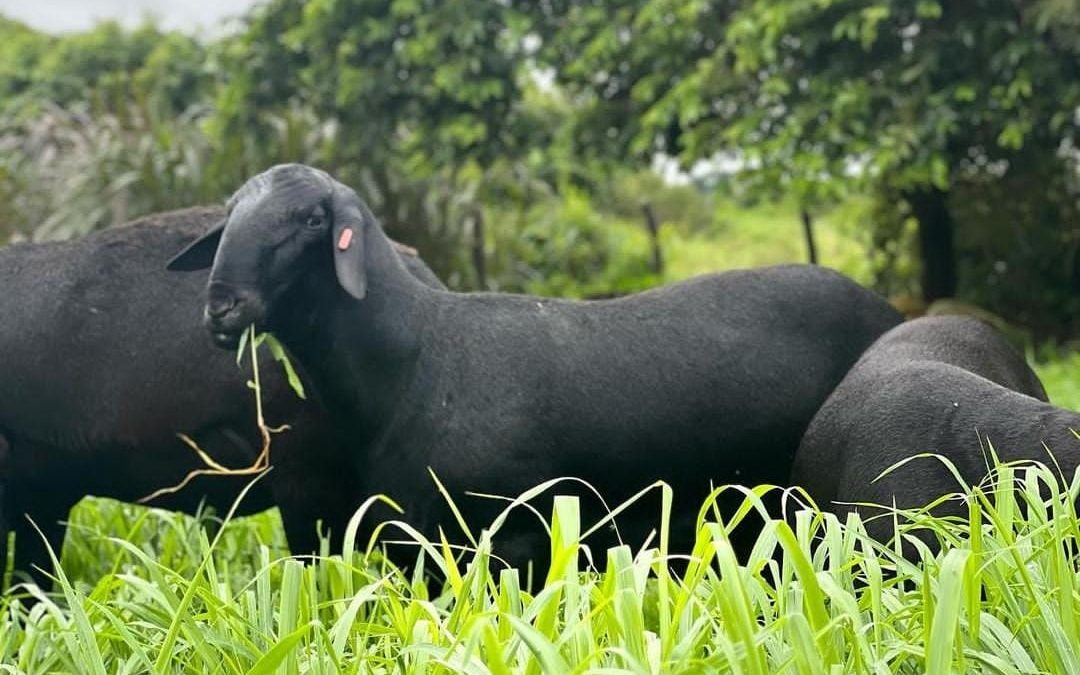
April 6, 2026The Santa Ines sheep (also written Santa Inez) is the most important hair sheep breed in Brazil and one of the most relevant breeds for tropical sheep production in Latin America. Developed through decades of selection in the semi-arid Northeast of Brazil, it combines outstanding heat tolerance, parasite resistance and reproductive efficiency in a single medium-to-large frame animal.
In this guide you will find everything you need to know about the Santa Ines breed: its origin, physical characteristics, productive potential and key management practices.
Origin and Development of the Santa Ines Breed
The Santa Ines was developed in the state of Bahia, Brazil, over several decades of empirical selection by farmers in the semi-arid Northeast (Sertao). Its exact genetic composition is not fully documented, but it is believed to derive from crosses involving:
- Bergamasca (Italian wool breed imported to Brazil)
- Morada Nova (small Brazilian hair breed)
- Rabo Largo (native fat-tailed breed)
- Other Criollo and exotic bloodlines
The breed was officially recognized in Brazil in the 1980s and has since spread throughout the country and to other Latin American countries. It is registered and promoted by the ARCO (Brazilian Association of Sheep and Goat Breeders).
Physical Characteristics
The Santa Ines is a medium-to-large, polled hair breed with a varied coat color range. Key physical traits:
- Coat: Short hair coat (no wool) in colors ranging from white, gray, black, red, and multicolored patterns
- Head: Convex (Roman) profile — more pronounced in males
- Ears: Medium to long, pendulous
- Body: Well-developed, with a deep chest and long trunk
- Tail: Medium length — not fat-tailed like some other breeds
- Horns: Polled (both sexes)
- Adult ram weight: 80–130 kg
- Adult ewe weight: 50–90 kg
The breed shows considerable variation in size and coat color depending on the bloodline and region of origin. Some breeders have developed selection lines for specific colors (white, or patterned black-and-white).
Meat Production Performance
The Santa Ines is primarily a meat breed, although its milk production is sufficient to raise twins. Production data:
- Average daily gain (lambs): 150–250 g/day on pasture; up to 300 g/day with supplementation
- Slaughter weight: Lambs typically reach 28–35 kg at 3–4 months
- Dressing percentage: 44–50%
- Meat quality: Lean, fine-grained, with mild flavor — no lanolin smell
While the Santa Ines does not match European meat breeds like Suffolk or Hampshire in raw growth rate, its advantage lies in achieving acceptable performance in harsh environments where wool breeds or fast-growing European breeds would struggle or require much higher inputs.
Reproductive Characteristics
The Santa Ines is known for its excellent reproductive efficiency, which is one of its main competitive advantages:
- Year-round breeding: Unlike most European breeds, Santa Ines is not seasonally polyestrous — it can breed and lamb throughout the year in tropical conditions
- Prolificacy: 150–200% (twins are common in well-managed flocks)
- Puberty: Lambs reach puberty at 5–8 months
- Inter-lambing interval: Can achieve 3 lambings in 2 years in intensive systems
- Maternal ability: Ewes are excellent mothers with good milk production for their size
Adaptability: The Key Advantage
The most remarkable characteristic of the Santa Ines is its adaptability to challenging environments:
- Heat tolerance: Maintains performance at ambient temperatures above 35°C where wool breeds suffer greatly
- Drought resistance: Can sustain periods of reduced forage availability due to efficient metabolic adaptation
- Parasite resistance: Research in Brazil has consistently shown Santa Ines animals have significantly lower fecal egg counts and lower FAMACHA scores compared to wool breeds under the same conditions — particularly against Haemonchus contortus
- Disease resistance: Robust immune system adapted to the challenging disease environment of the Brazilian semi-arid
These traits make the Santa Ines highly suitable for smallholder systems in tropical regions with limited veterinary and nutritional inputs.
Santa Ines in Crossbreeding
The Santa Ines is widely used as a maternal breed in crossbreeding programs in Brazil. Common crosses:
- Santa Ines x Dorper: The most popular cross in Brazil — combines Santa Ines adaptability with Dorper growth and carcass quality. Produces heavier, faster-growing lambs than purebred Santa Ines.
- Santa Ines x Suffolk: Produces lambs with excellent muscle conformation for markets demanding heavy carcasses
- Santa Ines x Ile de France: Used in some regions for commercial lamb production
The Santa Ines ewe’s year-round breeding and good maternal ability make it an ideal base for any terminal sire crossbreeding program in tropical regions.

Management Recommendations
Key management practices to maximize Santa Ines productivity:
Nutrition
- Base the diet on improved tropical grasses (Brachiaria, Tifton, Panicum) or native forage in semi-arid areas
- Provide strategic protein/energy supplementation for pregnant and lactating ewes
- Supplement lambs in finishing with 200–400 g/day of concentrate to improve growth rate
- Ensure adequate mineral supply — selenium and copper deficiencies are common in tropical soils
Parasite Control
- Use FAMACHA scoring to identify animals needing treatment — avoid blanket antiparasitic treatment
- Apply targeted selective treatment (TST) protocols: treat only animals with FAMACHA score 3, 4 or 5
- Rotate antiparasitic classes to prevent resistance development
- Cull animals that consistently require treatment (they are genetically susceptible)
Reproduction
- Implement a 45–60 day mating season to concentrate lambings and facilitate management
- Flush ewes 2–3 weeks before mating (increase nutrition to stimulate ovulation)
- Ensure lambs receive adequate colostrum in the first 2 hours of life
- Record all breeding and lambing events for genetic evaluation
Tracking individual animal data in OvinApp — weight gains, FAMACHA scores, reproductive events, and health records — allows you to make better selection decisions and identify your most productive Santa Ines animals over time.