
What Do Sheep and Goats Eat? Complete Feeding Guide
April 6, 2026
Productive and Reproductive Parameters in Sheep: Key Reference Values
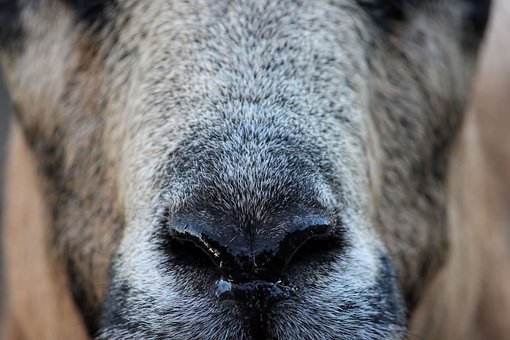
April 6, 2026If you notice sheep rubbing their noses on the ground, shaking their heads or showing clear to mucous nasal discharge, you may be dealing with one of the most common and underdiagnosed parasitic conditions in sheep production: nasal bots caused by Oestrus ovis, also known as the sheep nasal bot fly.
What Is Oestrus ovis?
Oestrus ovis is a fly belonging to the family Oestridae. It is the nasal bot fly of sheep and goats — its larvae (bots) develop inside the nasal passages and sinuses of the host animal. The condition caused by these larvae is called oestrosis or nasal myiasis.
The condition is found worldwide — in North America, South America, Europe, Africa, the Middle East, Australia and New Zealand — wherever sheep and goats are raised.
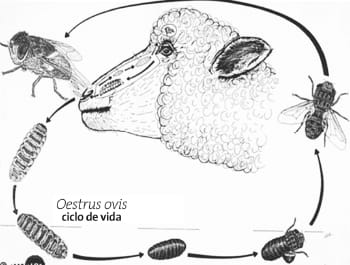
Life Cycle of Oestrus ovis
Understanding the life cycle helps you time treatments correctly:
- Adult fly: Active during warm months (spring to autumn). Does not feed — its only purpose is reproduction.
- Larviposition: The female fly deposits first-stage larvae (L1) directly into the nostrils of sheep and goats while hovering near the animal’s face. This is the cause of the characteristic head-shaking and nose-rubbing behavior when flies are active.
- L1 to L2 stage: Larvae migrate from the nostrils into the nasal passages and sinuses, developing through larval stages over weeks to months.
- L3 stage: Mature larvae migrate back to the nostrils, are expelled by sneezing, fall to the ground and pupate in the soil.
- Pupal stage: 3–9 weeks in the soil before adult flies emerge.
- Total cycle: 2–10 months depending on temperature and climate.
Symptoms of Nasal Bots in Sheep
Clinical signs vary by larval burden and stage of infestation:
During fly activity (when flies are depositing larvae):
- Intense head-shaking and head-tossing
- Rubbing the nose on the ground or against fences
- Sneezing repeatedly
- Grouping together (animals cluster to reduce individual fly exposure)
- Reduced grazing time and productivity loss
With established larval infestation:
- Clear to mucous-purulent nasal discharge — one or both nostrils
- Nasal discharge may become bloody or greenish if secondary bacterial infection develops
- Labored breathing or noisy breathing (if sinuses are severely affected)
- Reduced feed intake and weight loss in heavily infested animals
- In rare severe cases: head pressing, circling, neurological signs (“false gid”) if larvae reach the brain
How to Confirm Diagnosis
Diagnosis is primarily clinical — based on signs, season and inspection of the nasal discharge. At slaughter, larvae can be found inside the nasal passages and frontal sinuses. During a clinical exam, larvae may occasionally be visible at the nostril openings.
Important: clear nasal discharge in sheep can also be caused by other conditions — respiratory viruses, Mycoplasma, Pasteurella — rule out these causes if animals show fever, cough or other systemic signs alongside nasal discharge.
Treatment of Oestrus ovis (Nasal Bots)
Several antiparasitic drugs are effective against Oestrus ovis larvae. The most important are:
- Ivermectin (injectable or oral): Highly effective against all larval stages. Standard dose 0.2 mg/kg. The most widely used treatment worldwide.
- Doramectin: Similar to ivermectin, long-acting, effective against L1-L3.
- Closantel: Excellent activity against late-stage larvae (L2, L3), often combined with ivermectin for broad-spectrum coverage.
- Moxidectin: Effective against larvae, longer half-life than ivermectin.
- Rafoxanide: Older product, still used in some regions, effective against nasal bots.
Treatment timing: For best results, treat at the end of fly season (early winter/autumn) when larvae are in early stages, and again in late winter before larvae mature and pupate. This breaks the cycle most effectively.
Prevention and Control Strategies
- Strategic treatment timing: Treat the whole flock at the end of the fly season — this kills larvae before they can complete development and produce next year’s adults.
- Fly repellents: Pour-on or spray preparations containing cypermethrin, deltamethrin or other pyrethroids applied around the head/nostrils can reduce larviposition during peak fly activity.
- Shelter during peak activity: Providing shade structures allows animals to shelter during the hottest parts of the day when flies are most active.
- Housing management: Cleaning manure and organic material from pens reduces fly breeding sites.
- Monitoring: Watch for behavioral signs of fly harassment during the warm season — head-tossing, bunching, reduced grazing are early indicators that fly pressure is high.
Recording health events, treatments and observed clinical signs for each animal in OvinApp gives you a clear timeline of parasite problems on your farm, making it easier to time your prevention treatments correctly and evaluate their effectiveness season over season.