

Why Do Ewes Reject Their Lambs? Causes and Solutions
April 6, 2026
Kiko Goat: Characteristics, Parasite Resistance and Meat Production
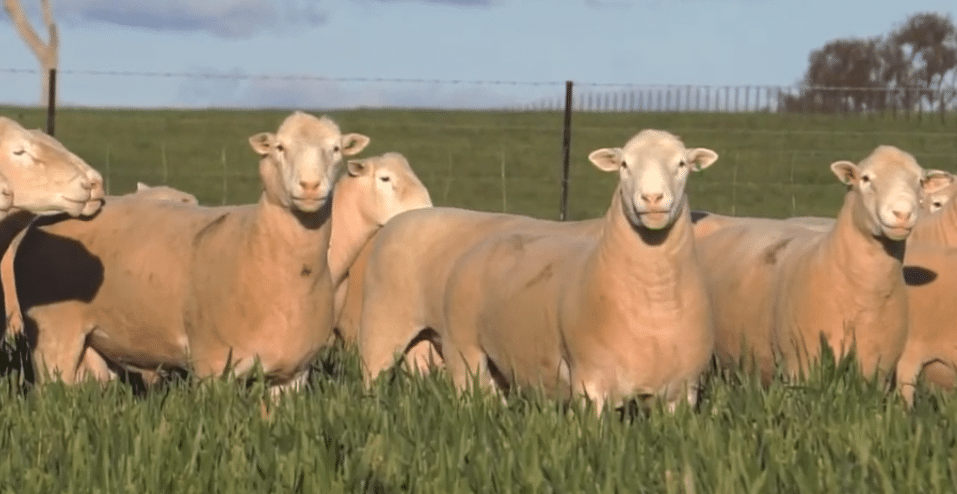
April 6, 2026The Poll Dorset sheep is one of the most commercially important and versatile meat breeds in the world. Originating in Australia from the Dorset Horn breed, it is valued not only for its solid meat conformation and growth rate, but especially for a trait that is rare among wool breeds: the ability to breed and lamb at almost any time of year. This out-of-season breeding capability makes it a key breed for producers who want to supply lamb to market year-round.
Origin and History
The Poll Dorset was developed in Australia in the 1950s, primarily through selection for polled animals within the Dorset Horn breed — which originated in the English counties of Dorset and Somerset in the 18th century. The first polled Dorsets were produced by crossing Dorset Horns with Corriedales and Ryeland sheep in Australia, selecting for the natural poll (hornless) trait over several generations.
The Poll Dorset Sheep Society of Australia was established in 1954. The breed rapidly gained commercial importance and spread to New Zealand, the United States, Canada, South Africa and South America.
Physical Characteristics
- Head: White, broad, free of wool, slightly Roman-nosed
- Ears: Medium-length, white, horizontal
- Horns: Polled (both sexes) — the defining difference from the Dorset Horn
- Body: Compact, well-muscled, deep-chested, with good width across the loin and hindquarters
- Fleece: White, medium-fine (27–33 microns), covers body including legs to the knees
- Legs: White, strong, well-spaced
- Adult ram weight: 100–140 kg
- Adult ewe weight: 70–100 kg
Meat Production Performance
- Average daily gain: 250–350 g/day under good nutrition
- Slaughter weight: Lambs typically reach 35–50 kg at 4–6 months
- Dressing percentage: 50–54%
- Carcass conformation: Good — well-muscled leg and loin, adequate fat cover
- Meat quality: Fine-grained, tender, mild flavor
The Poll Dorset is used both as a purebred and as a terminal sire in crossbreeding programs. Its progeny show good growth rates and acceptable carcass quality.
The Key Advantage: Out-of-Season Breeding
The Poll Dorset’s most commercially valuable characteristic is its ability to cycle and conceive outside the normal breeding season. While most temperate wool breeds are short-day breeders (cycling only in autumn), Poll Dorset ewes show estrus in spring and summer as well, enabling:
- Spring lambing (for Christmas/summer lamb markets in the southern hemisphere)
- Counter-seasonal lamb production (supplying the market when other breeds are not producing)
- Multiple-lamb systems — 3 lambings in 2 years or even accelerated lambing programs
- Year-round supply contracts with supermarkets and processors
This out-of-season breeding ability is particularly valuable in Australia and New Zealand, where Poll Dorsets dominate the spring lamb production market. In the northern hemisphere, they fill an important niche for Easter and holiday lamb supply.
Reproductive Characteristics
- Breeding season: Extended — ewes can be mated year-round, with reduced conception rates in late spring compared to autumn
- Prolificacy: 130–165%
- Gestation: 147–150 days
- Puberty: Ewe lambs reach puberty at 6–8 months
- Maternal ability: Good — attentive mothers with adequate milk production for twins
Poll Dorset in Crossbreeding
As a terminal sire, the Poll Dorset produces crossbred lambs with:
- Improved growth rate over maternal breeds
- Good carcass quality and fat cover
- Retention of out-of-season breeding in F1 ewes (making Poll Dorset x Merino or x Corriedale ewes also suitable for extended-season systems)

Management Recommendations
- Nutrition: Requires good-quality pasture or hay plus concentrate supplementation for finishing lambs and supporting lactation
- Shearing: Once or twice per year; fleece is a secondary product
- Parasite control: Moderate susceptibility to gastrointestinal nematodes — implement FAMACHA monitoring
- Ram management: When using Poll Dorset rams for out-of-season mating, introduce rams to ewes in spring/summer; use a ram effect (teaser rams) to synchronize estrus in ewes that have been separated from rams for at least 4 weeks
- Lambing supervision: Spring lambings may coincide with more variable weather — provide shelter and monitor closely
Tracking mating dates, lambing records and individual weight gains in OvinApp is especially valuable in Poll Dorset operations running multiple lambing rounds per year — keeping your records organized across overlapping production cycles is essential for maximizing the breed’s out-of-season breeding advantage.