
East Friesian Sheep (Frisona Milchschaf): The World’s Top Dairy Sheep Breed
April 6, 2026
Why Do Ewes Reject Their Lambs? Causes and Solutions
April 6, 2026Tail docking — known in Spanish-speaking countries as descole or descola — is the partial removal of a lamb’s tail, typically performed in the first days or weeks of life. It is a widely practiced management procedure in wool sheep operations worldwide, primarily aimed at reducing the risk of fly strike (blowfly myiasis), a serious and potentially fatal condition caused by blowfly larvae feeding on soiled wool around the tail.
Why Is Tail Docking Done?
In wool breeds, long tails accumulate fecal matter, urine and moisture in the wool (called “wool dag” or “dags”). This creates an ideal environment for blowflies to lay eggs, which develop into maggots that feed on the skin and flesh — a potentially fatal condition called flystrike.
A docked tail significantly reduces:
- Accumulation of fecal matter and urine in the perineal area
- Blowfly attraction to the area
- Risk of flystrike in the perineal and tail region
- Labor required for dagging (wool clipping around the rear)
Important note: Tail docking is most relevant in wool breeds. Hair sheep breeds (Dorper, Katahdin, Pelibuey, Santa Ines) have naturally short, lean tails that do not accumulate dag and generally do not benefit from docking — the procedure is not routinely recommended for hair breeds.
Optimal Age for Tail Docking
Tail docking should be performed as early as practical, ideally:
- Optimal age: 2–7 days old — at this age, lambs have good maternal bond, surgery is quick, pain response is least and healing is fastest
- Can be done up to 4 weeks of age
- After 4 weeks, more pain, more bleeding and higher risk of complications
- Older than 6–8 weeks: not recommended without proper anesthesia and pain management
Many producers combine tail docking with other early-life procedures: ear tagging, recording birth weight, castration of male lambs not retained for breeding, and colostrum assessment.
Methods of Tail Docking
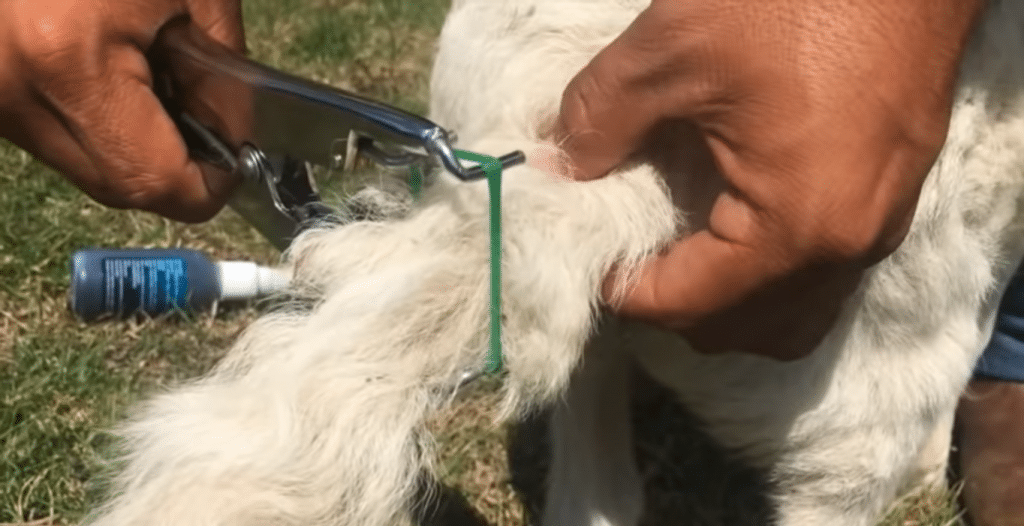
1. Rubber Ring (Elastrator)
The most widely used method in extensive operations. A tight rubber ring is applied using an elastrator tool at the correct position on the tail. The ring cuts off blood supply and the tail detaches within 1–2 weeks.
- Advantages: Inexpensive, no bleeding, quick, can be done without veterinary assistance
- Disadvantages: Most painful method — causes acute pain for several hours; risk of tetanus if not vaccinated; must ensure ring is placed at correct position
- Best practice: Vaccinate ewes pre-lambing against tetanus (passes antibodies to lambs via colostrum) or give lambs tetanus antitoxin at time of procedure
2. Hot Iron (Cauterizing Docking Iron)
A heated cutting iron severs the tail and simultaneously cauterizes blood vessels. Standard in Australia and New Zealand in many operations.
- Advantages: Minimal bleeding, fast healing, lower tetanus risk (cauterized tissue)
- Disadvantages: Requires specialized equipment and training; risk of burns if temperature not correct
3. Surgical Cutting (Scalpel or Knife)
Sharp cut at the correct location, followed by suturing or cautery of blood vessels. Most appropriate for older lambs (over 3–4 weeks) where other methods carry higher risk.
- Advantages: Precise; appropriate for older animals with local anesthesia
- Disadvantages: More invasive; requires veterinary skill; more post-operative care
Correct Tail Length After Docking
This is one of the most important and often misunderstood aspects of tail docking:
- Too short (above third vertebra): Removes the protective function of the tail for the perineal area; dramatically increases the risk of rectal prolapse; associated with reduced athletic performance and joint pain in adults
- Too long (below mid-metacarpal level): Does not adequately protect against flystrike — excessive tail wool still accumulates dag
- Correct length: Leave enough tail to cover the vulva in ewes and the equivalent in rams — in most cases, this means leaving 3–4 vertebrae below the base of the tail. As a practical guide, the tail end should reach the base of the vulva when extended.
In many countries, animal welfare regulations specify minimum tail length requirements. Check local regulations in your country or region before docking.
Pain Management and Animal Welfare
Tail docking causes pain. Best practices to minimize suffering:
- Perform at the youngest possible age (2–7 days) when pain response is least
- Local anesthetic: Lidocaine injection at the docking site at least 10 minutes before the procedure significantly reduces acute pain
- NSAID analgesia: Meloxicam or flunixin given before the procedure reduces both acute and post-procedural pain
- Return lambs to their dam immediately after docking — dam contact reduces stress response
Post-Docking Care
- Apply iodine spray or wound dressing to the tail stump immediately after docking (for surgical and ring methods)
- Monitor for signs of infection: swelling, discharge, fever, reluctance to move
- Ensure lambs have been vaccinated against tetanus (via maternal antibodies or direct vaccination)
- Keep lambing environment clean and dry to reduce infection risk
Is Tail Docking Necessary?
Tail docking is controversial in some countries and regions. Factors to consider:
- Wool breeds in high-flystrike-risk environments: Docking is strongly recommended — the welfare cost of flystrike (which causes extreme suffering) outweighs the short-term discomfort of proper docking
- Wool breeds in low-flystrike-risk areas: Less clear-cut — evaluate the local flystrike risk and consider alternatives like regular dagging
- Hair breeds: Generally not indicated — monitor individual animals and only dock if recurrent soiling is a problem
- Alternative management strategies: Selecting for naturally short, bare-tailed animals; selecting for open-breech (less wool around the rear) reduces the need for docking
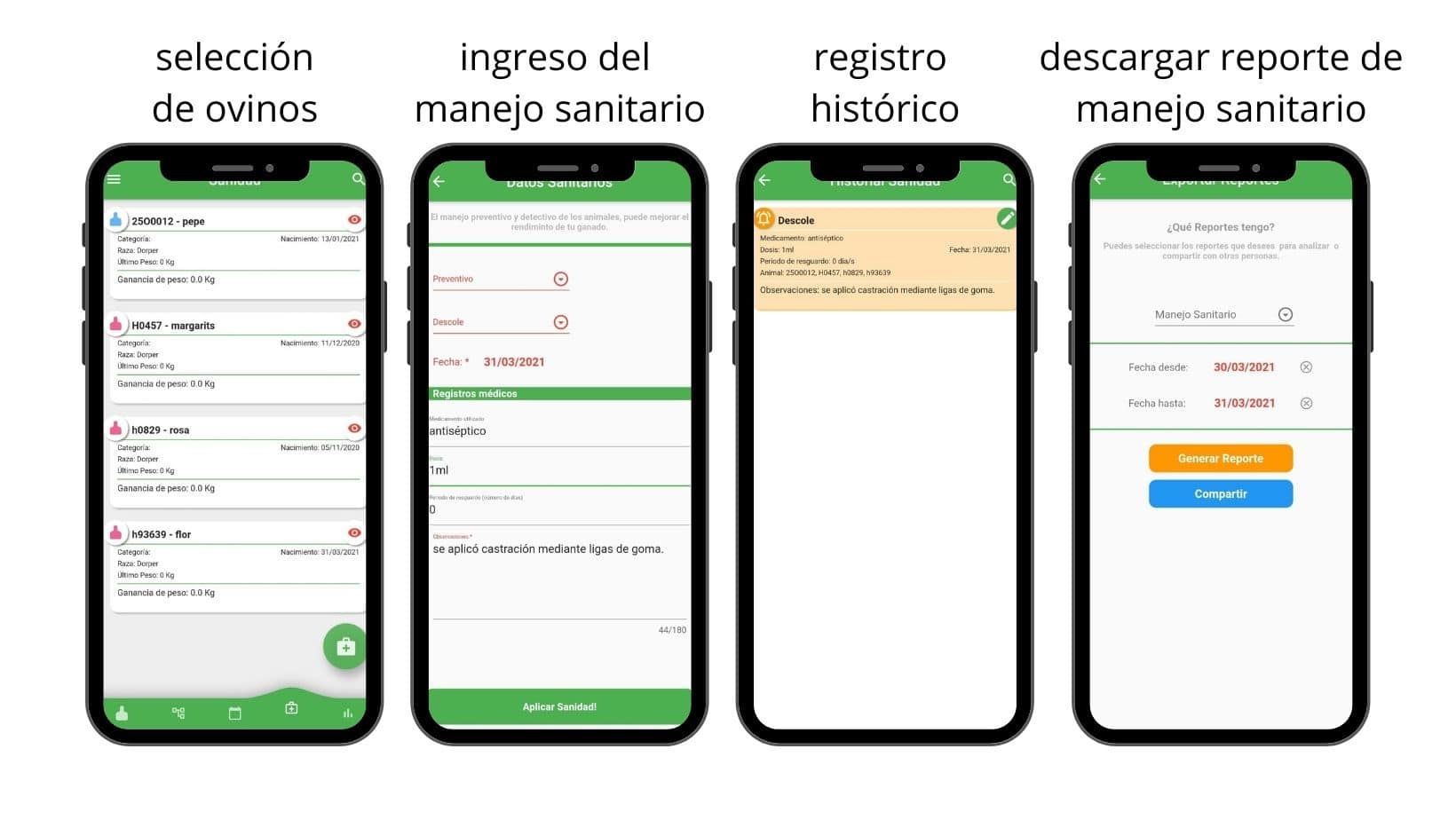
Recording all health management procedures — including tail docking dates, methods, complications and post-docking health status — for each lamb in OvinApp helps you maintain complete animal records and ensures no management event goes unrecorded.