

Sterile Flies Against New World Screwworm: Did SIT Work Worldwide? (Uruguay’s San José Plant)
November 9, 2026
Footrot in sheep and goats: causes, treatment and control
November 16, 2026Pregnancy toxemia in ewes and does: signs, treatment and prevention
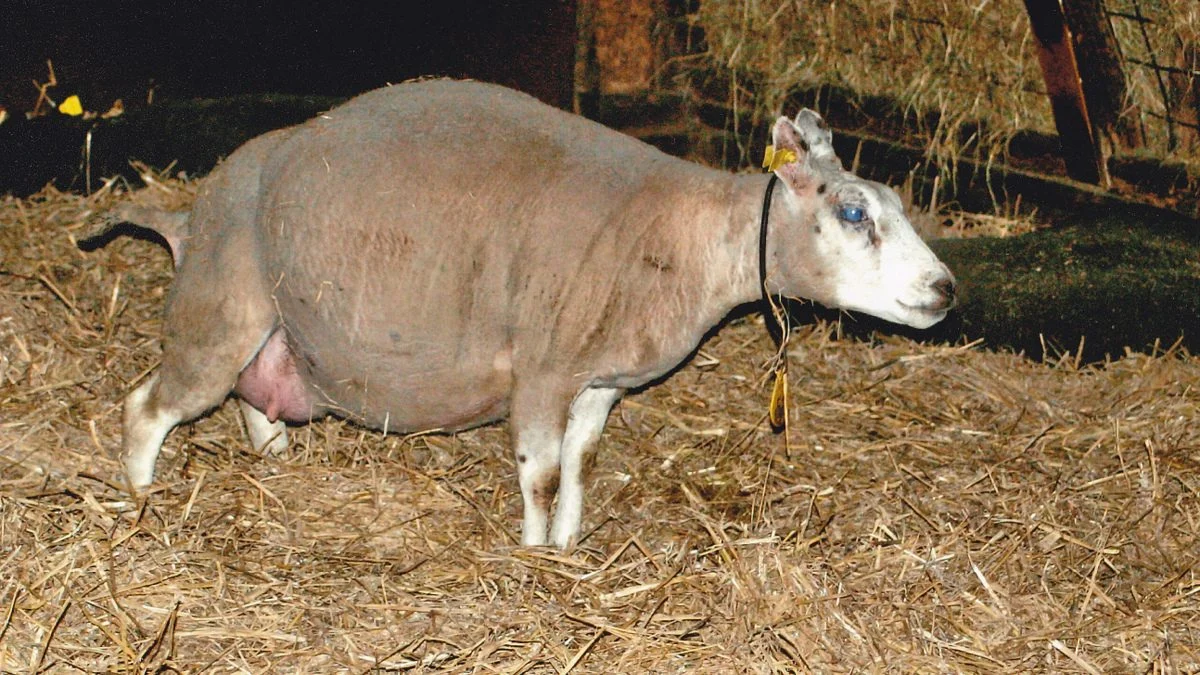
Peter van der Sluijs, Wikimedia Commons, CC BY-SA 3.0. Fuente / Source / Fonte.
Pregnancy toxemia in ewes is a common metabolic emergency of late gestation. The ewe stops eating, isolates herself, lies down more than the rest, and can go from sluggishness to being recumbent in a few days. It is not contagious: it is an energy problem. When the ration cannot keep up with the demands of the fetuses, carbohydrate and fat metabolism is disrupted. The earlier it is detected, the more room there is to act (MSD Veterinary Manual; SciELO).
What it is and why it appears
Pregnancy toxemia is the most common metabolic disorder in pregnant small ruminants. It appears at the end of pregnancy because of inadequate carbohydrate and fat metabolism. It is also called ketosis or twin lamb disease, and it is a serious condition in ewes and does (MSD Veterinary Manual).
The main cause is inadequate nutrition in late gestation: the ration has low energy density and the rumen has less room because of fetal growth. If intake does not cover demand, the female enters a negative energy balance, which is the basis of ketosis (MSD Veterinary Manual).
The risk rises when the female carries more than one fetus. Females with a body condition score of 2 out of 5 or less, or 4 out of 5 or more, and pregnant with twins or triplets are the most exposed, although it can also appear in animals in ideal condition and on an adequate ration. In Argentine outbreaks, most of the affected animals carried twins or triplets (MSD Veterinary Manual; Revista Veterinaria UNNE).
The energy arithmetic explains the rest. A 70 kg ewe goes from 2.8 to 3.45 Mcal per day with a single lamb, and reaches 4.95 with triplets. 80% of fetal growth occurs in the last six weeks (MSD Veterinary Manual; UC Davis School of Veterinary Medicine).
It also occurs in does, and the course is usually more acute, with a poorer response to treatment (Revista Veterinaria UNNE).
When it appears
Most cases occur between one and three weeks before parturition. If signs begin before day 140 of gestation, the disease is more severe and the risk of death increases. Other sources refer to the last four to six weeks: the ranges overlap (MSD Veterinary Manual; UF/IFAS Extension).
Symptoms: from sluggishness to going down
At first, the signs are subtle and easy to miss. The ewe eats less, especially less grain, lies down more than her penmates, is dull, has lackluster eyes, and passes less feces. She may also isolate herself and move more slowly (MSD Veterinary Manual; Oregon State University Extension; SciELO).
Without intervention, the condition progresses over two to four days to blindness, ataxia, sternal recumbency, coma, and death. Before that, tremors, circling, teeth grinding, disorientation, vision changes, stargazing, or seizures may appear. In lactating females, milk can drop from one day to the next (MSD Veterinary Manual; UF/IFAS Extension; Oregon State University Extension).
When the animal can no longer get up, the prognosis is grave. She may remain permanently recumbent three or four days after signs begin and stay deeply depressed until death (UFRGS).
How it is diagnosed
The veterinarian makes the diagnosis using the expected due date, the number of fetuses, feed intake, and body condition. Ketones can be measured in urine with test strips and in blood, along with glucose. Ketonuria usually appears before ketonemia (MSD Veterinary Manual; UF/IFAS Extension).
One of the most widely used parameters is BHB, or beta-hydroxybutyrate. It measures how much fat is being mobilized for lack of energy. A normal value is below 0.8 mmol/L. In animals with clinical signs, cut-off values vary: UF/IFAS uses 1.6 mmol/L and MSD refers to more than 3 mmol/L (UF/IFAS Extension; MSD Veterinary Manual).
Glucose is not always low: up to 40% of cases have normal glucose and up to 20% have hyperglycemia, so a single measurement is not enough. BHB is also useful for following an animal’s progress and reviewing the nutritional status of the flock (MSD Veterinary Manual).
Treatment and prognosis
At the first suspicion, call the veterinarian. Every case is different, and the response is better when treatment starts as soon as signs appear. Waiting for the animal to recover on her own wastes time (UF/IFAS Extension).
The basis is to supply energy and remove the factors that cause the negative energy balance. In the early stages, nutritional adjustments and oral glucose precursors such as propylene glycol, glycerol, or propionic acid salts may help. If the animal is not eating or the rumen has stopped working, the most effective route is intravenous dextrose, which the veterinarian administers (UF/IFAS Extension; SciELO México).
If the mother’s life is the priority, the veterinarian may consider inducing parturition or performing an emergency cesarean section. The aim is to cut off the glucose drain caused by the fetuses so that the female can regain her metabolic balance. It may also be considered if she is very thin or very fat and cannot meet the fetal demand (MSD Veterinary Manual; SciELO México).
The prognosis is serious: mortality in affected cases can exceed 40%, even with aggressive treatment and intensive care. In advanced cases, treatment is often ineffective, and if the animal is in a coma, euthanasia is justified; with the rest of the flock, action must be taken immediately. Glucose or propylene glycol may improve the condition for a while, but they rarely change the outcome if given too late (MSD Veterinary Manual; Revista Veterinaria UNNE).
Few of these drugs are approved for sheep or goats, so they must be used under veterinary direction. Keeping a well-organized basic veterinary first aid kit helps avoid delays, but it does not replace a consultation or authorize treating animals on your own (Oregon State University Extension).
Prevention: getting the final stretch right
Prevention starts with body condition. MSD recommends entering the last six weeks at no less than 2.5 out of 5; UF/IFAS aims to maintain 3.0 to 3.5 during pregnancy. The scales differ, but both call for moderate condition: neither thin nor fat. Overcondition also increases susceptibility, and abdominal fat limits how much feed the rumen can hold (MSD Veterinary Manual; UF/IFAS Extension).
To reach mating in good condition, the flushing technique in ewes helps plan nutrition. The final stretch, however, has its own rules: from the last four to six weeks, it is advisable to move gradually to a ration with greater energy density. Multiple pregnancies need grain as a carbohydrate source, and guidelines call for increasing feed by around 50% in a single pregnancy and 75% in a twin pregnancy (UF/IFAS Extension).
Scanning is one of the best investments for organizing the flock. Doing it between 40 and 90 days of gestation confirms pregnancy, counts fetuses, and separates females into groups. Those carrying two or more fetuses need more energy and closer monitoring, and this also avoids overfeeding those with a single lamb (UF/IFAS Extension; Oregon State University Extension).
Feed bunk management matters as much as the ration. If space is short, timid females do not get their share and are at a disadvantage just when they need the most energy. It is worth grouping by body condition, number of fetuses, and size, analyzing the forage, and formulating the ration. Reviewing the flock’s productive and reproductive parameters helps anticipate how many females will need more energy (MSD Veterinary Manual; Oregon State University Extension).
Stress in the third trimester also works against you. Anything that lowers intake, even briefly—transport, shearing, bad weather, a change of pen or penmates—can trigger ketosis. In does, it is especially important to avoid mixing groups that force them to fight over the hierarchy (Oregon State University Extension; UC Davis School of Veterinary Medicine).
Finally, general health supports nutrition. An effective anthelmintic, especially on pastures with a high parasite load, helps prevent the condition, and other diseases such as foot rot must also be treated, because they stop animals from walking to feed or standing up to eat. An effective flock health plan makes it possible to organize these tasks without adding unnecessary stress at the end of pregnancy (MSD Veterinary Manual; Oregon State University Extension).
Frequently asked questions
Is pregnancy toxemia contagious?
No. It is a metabolic disorder, not an infectious disease, so it does not pass from one ewe to another through contact. What can repeat is the management problem: if several females reach the final stretch thin, fat, or poorly fed, more cases are likely to appear in the same flock (MSD Veterinary Manual).
Is it the same as ketosis in does or twin lamb disease?
Yes, they are names for the same condition. In English it is known as pregnancy toxemia, and also as ketosis or twin lamb disease; in Spanish, the latter is called enfermedad de los mellizos or enfermedad de los gemelos. In does, ketosis is the same condition: a negative energy balance at the end of pregnancy (UF/IFAS Extension).
How is it different from hypocalcemia?
The signs can be similar, and sometimes both occur together: in some cases of toxemia, hypocalcemia is also detected. That is why the diagnosis is not based only on how the animal looks. The veterinarian evaluates the stage of pregnancy, the feeding, the ketones, and, if needed, other blood tests (MSD Veterinary Manual).
When should I call the veterinarian?
As soon as you notice that a pregnant female stops eating, isolates herself, lies down more than usual, or loses condition in the last few weeks. Do not wait for her to go down. If she stops eating completely, the prognosis worsens a great deal, and if she is already recumbent, the situation is serious. Early consultation is the biggest difference you can make (Oregon State University Extension; UC Davis School of Veterinary Medicine; SciELO).
Does it also affect does?
Yes. Pregnancy toxemia affects ewes and does during late pregnancy, and in the doe the course is usually more acute, with a poorer response to treatment. That is why, in a goat herd, daily checking and feeding in the final stretch matter as much as in a sheep flock (MSD Veterinary Manual; Revista Veterinaria UNNE).
Record lambing and health in OvinApp
If you have a ewe or a doe under treatment, in OvinApp you can record mating, the expected due date, treatment, and health follow-up. It is free for up to 20 animals.