

Pregnancy toxemia in ewes and does: signs, treatment and prevention
November 16, 2026Footrot in sheep and goats: causes, treatment and control
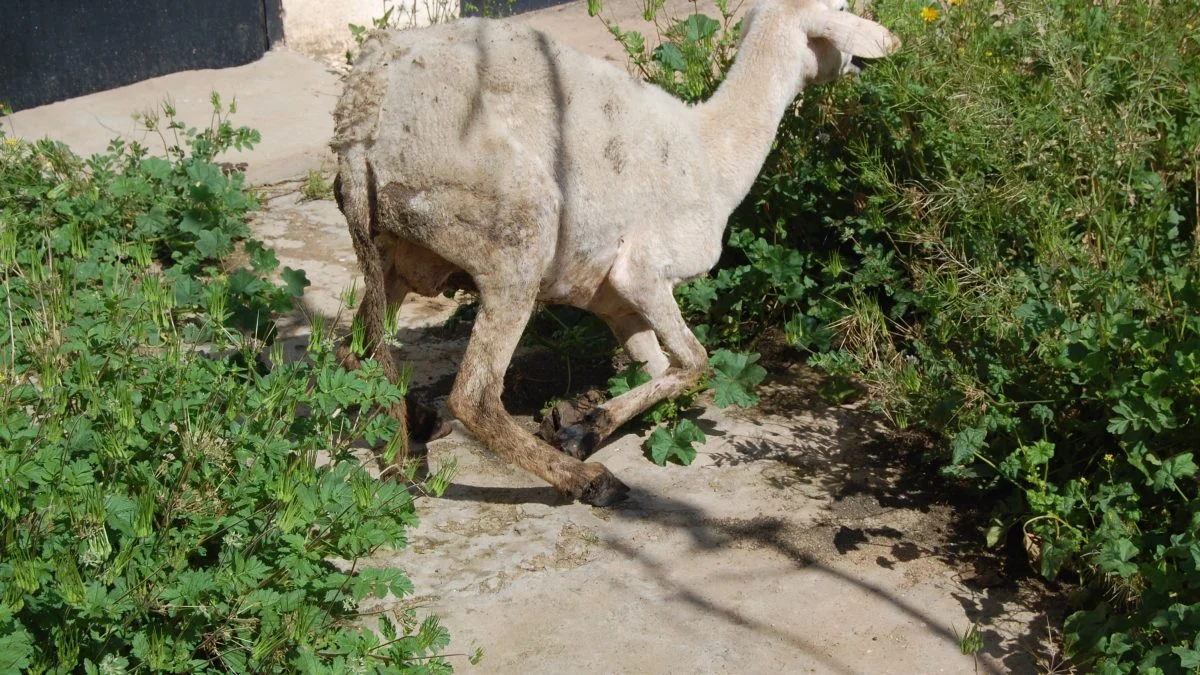
Lucien Mahin (Lucyin), Wikimedia Commons, CC BY-SA 4.0. Fuente / Source / Fonte.
Footrot in sheep and goats is one of the main foot conditions in the flock and affects wool and meat production as well as reproductive performance (INIA Uruguay). It is also known as hoof rot. It is usually recognised by lameness, a foul smell when the hoof is lifted, and separation between the hoof wall and the tissue beneath. It is contagious and painful. Here we look at which bacteria cause it, why it appears, how to tell it apart from other types of lameness, and how to treat and prevent it.
What footrot is and why it appears in the flock
Footrot is an infectious, contagious disease of the hoof caused by two anaerobic bacteria: Dichelobacter nodosus and Fusobacterium necrophorum. D. nodosus is the primary obligate agent: without it there is no disease. F. necrophorum, present in environments with manure, colonises macerated interdigital skin and prepares the ground for it (MSD Veterinary Manual; INIA Uruguay).
It is highly contagious: under the right conditions, morbidity can approach 100%. The bacterium does not survive long outside the animal — up to two weeks according to MSD, between 7 and 14 days according to INIA — but it can hide in pockets, cracks or deformities of the hoof and reactivate with moisture. Those sheep are carriers and usually remain infected for life. That is why the flock becomes reinfected through carriers, purchases without quarantine and other ruminants such as goats, deer or cattle (MSD Veterinary Manual; INIA Uruguay).
Moisture and temperature trigger outbreaks: transmission is faster in warm, wet weather, although cold, wet conditions also favour spread. In Uruguay the favourable periods are autumn and spring, with high humidity and warmth (INIA Uruguay). Risk rises when the temperature is above 10 °C, when more than 50 mm of rain has fallen in the past month, and with dense pastures containing clover or capeweed; also with waterlogged pasture, wet facilities and overcrowded areas (NSW Government).
Symptoms: lameness, odour and separation of the hoof
The most obvious sign is lameness in sheep, but affected feet are rarely lifted or completely non-weight-bearing. The animal limps, walks less, lags behind and eats less; in chronic cases the hoof becomes deformed and twisted (MSD Veterinary Manual).
On examination, the typical finding is separation between the wall and the tissue beneath. If you run your thumb between the wall and the interdigital tissue, the heel wall and the sole peel away, leaving a white, somewhat moist substance with a strong smell; it is not the opaque pus of an abscess (MSD Veterinary Manual). There may also be redness, swelling and increased heat between the claws (Embrapa).
Severity is measured with the Egerton and Roberts scale: 0 is healthy; 1 and 2 are lesions of the interdigital skin; 3, 4 and 5 involve detachment of the horn tissue, and 5 adds separation of the hoof walls (University of Sydney). The SUL plan considers grades 1, 2 and early grade 3 treatable, and calls for culling severe lesions and chronic carriers (SUL Uruguay).
The cost shows up in weight: an outbreak can cause an average loss of 50 g per day from pain and lower intake (MSD Animal Health Ireland). To review other signs, see the guide to common sheep diseases.
How to tell it apart from other lameness
Not all lameness is footrot. Interdigital scald — foot scald — is an inflammation between the toes that many sources attribute to F. necrophorum and other environmental bacteria; it is not contagious on its own, but it can precede footrot when D. nodosus is also involved (Virginia Cooperative Extension; Mississippi State University Extension; NSW Government). AHDB, by contrast, regards it as an early presentation of footrot, caused by the same bacterium (AHDB). In practice, a lesion between the toes with no detachment is treated and monitored.
CODD, or contagious ovine digital dermatitis, starts at the coronary band, above the hoof, and usually causes severe lameness; if it is suspected, call the vet (AHDB). A foot abscess is recognised by obvious swelling and by the claws separating; it is very painful, usually affects only one foot and does not cause the typical detachment of footrot, while dermatophilosis appears as reddish, lumpy lesions around the feet and is not footrot (NSW Government).
Diagnosis matters: the vet can take samples and use PCR to detect D. nodosus before signs appear, and to rule out CODD and other conditions that are confused with the virulent form (MSD Veterinary Manual; MSD Animal Health Ireland).
Footrot in goats: what changes
Goats are not immune. MSD has a specific page and notes that footrot and foot scald can have a significant impact on goats under certain management conditions (MSD Veterinary Manual). Virginia Cooperative Extension treats it as a problem of sheep and goats: the bacteria are wherever sheep or goats graze, and Embrapa agrees that contagious pododermatitis affects both species (Virginia Cooperative Extension; Embrapa).
There is a nuance: the sheep page in the same manual states that the infection is rarely found in goats, deer and cattle. The practical reading is not to underestimate them: if there are lame goats, they should be checked and isolated just like sheep, because they can act as a source of the bacterium (MSD Veterinary Manual).
Treatment: what to do with a lame sheep
First, separate. Every lame sheep should be set aside for examination and treatment and should not return to the flock until there is no evidence of footrot; clinical cases are segregated from the rest to stop spread (MSD Veterinary Manual). The sooner treatment starts, even for mild lameness, the better, because the disease spreads quickly (AHDB).
The vet defines the plan. The general options are long-acting parenteral antimicrobials or footbaths (MSD Veterinary Manual). Depending on the case, the vet may prescribe long-acting injectable antibiotics and, if needed, anti-inflammatories for pain, always under veterinary direction. The veterinarian defines the route and the withdrawal period.
The footbath is a flock-level tool, not a magic cure. It helps lower the bacterial load and is used with solutions such as zinc sulphate; formalin is not recommended because of occupational safety risks (NSW Government). The hooves must be cleaned well beforehand and afterwards the animals should be kept in a clean, dry place (INTA Informa). A footbath alone does not eradicate footrot or replace inspection and culling. Concentration, duration and frequency are set by the vet or the local plan.
With foot trimming, it is better to err on the side of caution: excessive hoof trimming is not recommended, and over-trimming can cause toe granuloma (MSD Veterinary Manual; MSD Animal Health Ireland). A cut that is too deep does not help healing and can make it easier for bacteria to spread (Virginia Cooperative Extension). The aim is to remove loose tissue, not to clean down to the quick. For examination, keep a well-organised basic veterinary first-aid kit for sheep and goats on hand.
Control, prevention and eradication
Prevention starts with biosecurity: every animal that comes in should spend several weeks in quarantine, with a minimum of two weeks before joining the flock. Do not buy at auctions or from unknown farms, and keep a closed flock. Trucks, trailers and facilities where infected animals have been are cleaned and disinfected before healthy animals arrive (MSD Veterinary Manual; MSD Animal Health Ireland).
Culling is part of control. Sheep that do not respond to treatment are isolated and, preferably, culled; the SUL plan removes chronic carriers, and Embrapa recommends culling all animals with chronic hoof problems (MSD Veterinary Manual; SUL Uruguay; Embrapa). It is harsh, but it cuts reinfection.
Vaccination helps: it speeds healing in affected animals and protects healthy ones, although its efficacy depends on the strains present in the vaccine and in the outbreak (MSD Veterinary Manual). It is therefore worth asking the vet to assess whether vaccination is worthwhile and which product to use (MSD Animal Health Ireland).
Two useful frameworks: AHDB’s five-point plan — cull, quarantine, treat, avoid spread and vaccinate — and MSD Ireland’s RSTUV — remove chronic cases, segregate, treat, understand the farm factors and vaccinate (AHDB; MSD Animal Health Ireland). They are adapted to each farm.
In Uruguay, the SUL plan inspects the whole flock in the dry summer, separates healthy animals, treats those that can recover and culls chronic cases and advanced lesions. Healthy animals go through a footbath and into a paddock that has been free of sheep for 15 days; MSD calls for an area without sheep for at least three weeks before restocking. These are different protocols: follow the one your vet advises. After two years and three inspections with no cases, SUL issues an annual certificate declaring the farm free of footrot (SUL Uruguay; MSD Veterinary Manual).
Eradication requires eliminating every case of D. nodosus and preventing its reintroduction. Australia organised its programme in three phases — control, eradication in the dry season and surveillance — and in Uruguay removing carriers lowers prevalence and in many cases allows eradication (MSD Veterinary Manual; INIA Uruguay). Mud and stocking rate are part of the problem (MSD Animal Health Ireland); a rotational grazing plan based on stocking rate, with paddock rest, is one option, although it does not replace inspection.
A written health plan, with inspection dates, treatments and culling decisions, makes a difference. You can learn how to create an effective health plan for your flock.
Frequently asked questions about footrot
Does footrot clear up on its own?
No. It may improve when the weather dries, but the bacterium remains in carrier animals and the flock becomes reinfected (MSD Veterinary Manual). Treatment and control require diagnosis and veterinary follow-up.
How long does it take to appear after infection?
The incubation period is around 14 days; that is why footbaths every 10 days interrupt spread in wet periods (MSD Veterinary Manual). If several cases appear together, check the whole flock (SUL Uruguay).
Is a footbath useful for the whole flock?
As a management tool, yes, but it does not eradicate the disease on its own and can be counterproductive if you put the animals into a muddy pen (NSW Government). Clean the hooves first, use the solution the vet recommends and return the animals to a dry place (INTA Informa).
Does vaccination eliminate footrot?
It does not eliminate it on its own. It helps affected animals heal faster and protects healthy ones, but its effect depends on the strains circulating on the farm and those contained in the vaccine (MSD Veterinary Manual). The decision to vaccinate is discussed with the vet (AHDB).
Record cases and organise flock health
For the producer, footrot is controlled with consistency: inspect, record and treat in time. If you want to keep track of each animal, OvinApp lets you record treatments, health events and clinical cases in your flock, free for up to 20 animals. See how OvinApp works and get your farm’s records in order.