
How to Select a GOOD Sheep Breeder?
August 9, 2024
Katahdin Sheep: Characteristics, Origin and Meat Production
April 5, 2026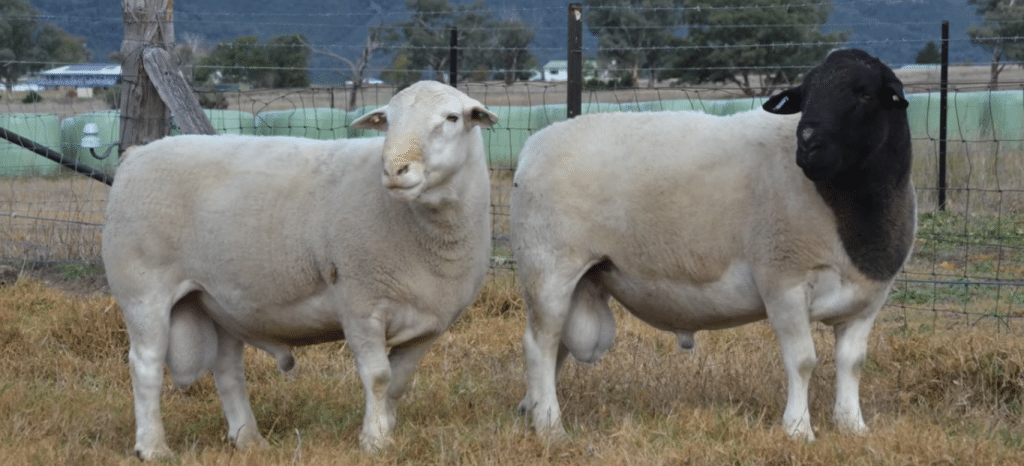
The Dorper sheep is one of the most productive and versatile hair sheep breeds in the world. Originally from South Africa, it has conquered farmers across Latin America, the United States, Australia, and beyond — and for very good reason. It doesn’t need shearing, adapts to harsh climates, and produces exceptional meat yields.
Origin and History of the Dorper Breed
The Dorper was developed in South Africa in the 1930s through a cross between the Dorset Horn and the Blackhead Persian. The goal was simple: create a sheep that could thrive in arid, difficult conditions while producing high-quality meat. The breed was officially established in 1950 and quickly spread across South Africa before gaining worldwide popularity.
Today, the Dorper is found on every continent. In Latin America, it has become one of the top choices for farmers seeking efficient, low-maintenance meat production.
Physical Characteristics of the Dorper Sheep
The Dorper has a distinctive appearance that makes it easy to recognize:
- Black head and neck with a white body (in the standard variety)
- Short, mixed coat that sheds naturally — no shearing required
- Compact, muscular body with a broad, deep chest
- Strong legs adapted for walking long distances in search of food
- Medium-sized ears, slightly drooping
Adult males (rams) typically weigh between 90 and 140 kg, while adult females (ewes) range from 65 to 95 kg. The breed also has a white variety (White Dorper) that lacks the black head marking.
Productive Characteristics: Why Farmers Choose the Dorper
The Dorper stands out for several production advantages:
- Exceptional growth rate: lambs can reach 36 kg in just 90–100 days
- High dressing percentage: between 52% and 60%
- Year-round breeding: not limited to a specific season
- High prolificacy: 1.5 to 2 lambs per ewe per year
- Excellent mothering ability
- No shearing needed: coat sheds naturally, saving labor and cost
The Dorper also has remarkable grazing adaptability. It can thrive on low-quality pastures, dry scrubland, and even browse on shrubs. This makes it ideal for regions where other breeds would struggle.
Dorper Meat Quality
Dorper meat is known for its fine texture, mild flavor, and excellent tenderness. The fat is well-distributed, producing a juicy, flavorful product. Compared to wool breeds, Dorper meat has a less pronounced “mutton” taste, making it more appealing to a wider market.
Slaughter is typically done between 80 and 120 days of age, with lambs reaching ideal market weight early and efficiently.
Climate Adaptation and Management
One of the Dorper’s greatest strengths is its climate resilience. It performs well in:
- Hot, arid climates (original South African environment)
- Tropical and subtropical regions
- Temperate climates with cold winters
- Semi-arid scrubland
Management is relatively simple. The breed is hardy, disease-resistant, and requires minimal supplemental feeding under good pasture conditions. However, regular health monitoring — including vaccinations, deworming, and hoof care — is essential.

Is the Dorper Right for Your Farm?
The Dorper is an excellent choice if you:
- Want to produce quality lamb meat efficiently
- Are in a warm or dry climate
- Want to minimize labor (no shearing)
- Are looking for a breed that thrives on natural pasture
- Want fast returns: lambs reach market weight quickly
Track Your Dorper Flock with OvinApp
Managing a Dorper flock means tracking births, health records, weights, and feed. OvinApp is the free app designed specifically for sheep and goat producers. Record each animal’s history, generate production reports, and make data-driven decisions — all from your smartphone.