

10 Breeds of Hair Sheep: Which One to Choose for Meat Production
April 29, 2026Suffolk Sheep: Characteristics, Meat and Origin
April 29, 2026The Santa Inés breed of sheep is a breed of sheep native to Brazil, which is characterized by its ability to adapt to the climatic and grazing conditions of tropical and subtropical areas. In this article, we are going to describe the characteristics of this breed, both males and females, as well as its origin, history, and advantages and disadvantages.
Origin and history of the Santa Inés sheep breed
The Santa Inés sheep breed was developed by the Sao Paulo Zootechnics Experimental Station, in Brazil, from the crossing of local sheep with breeds imported from England, Australia and New Zealand. The goal was to develop a breed that could adapt to the climatic and grazing conditions of the tropical and subtropical areas of Brazil, and at the same time be productive in terms of meat and leather.
In 1964, the first flock of Santa Inés sheep was established in Brazil, and has since expanded to other Latin American and Caribbean countries, such as Colombia, Venezuela, Mexico, Cuba and the Dominican Republic. Currently, it is one of the most popular sheep breeds in Brazil and the region, and has been used in genetic improvement programs to improve the productivity of other sheep flocks.
Morphological and phenotypic characteristics of the Santa Inés sheep breed
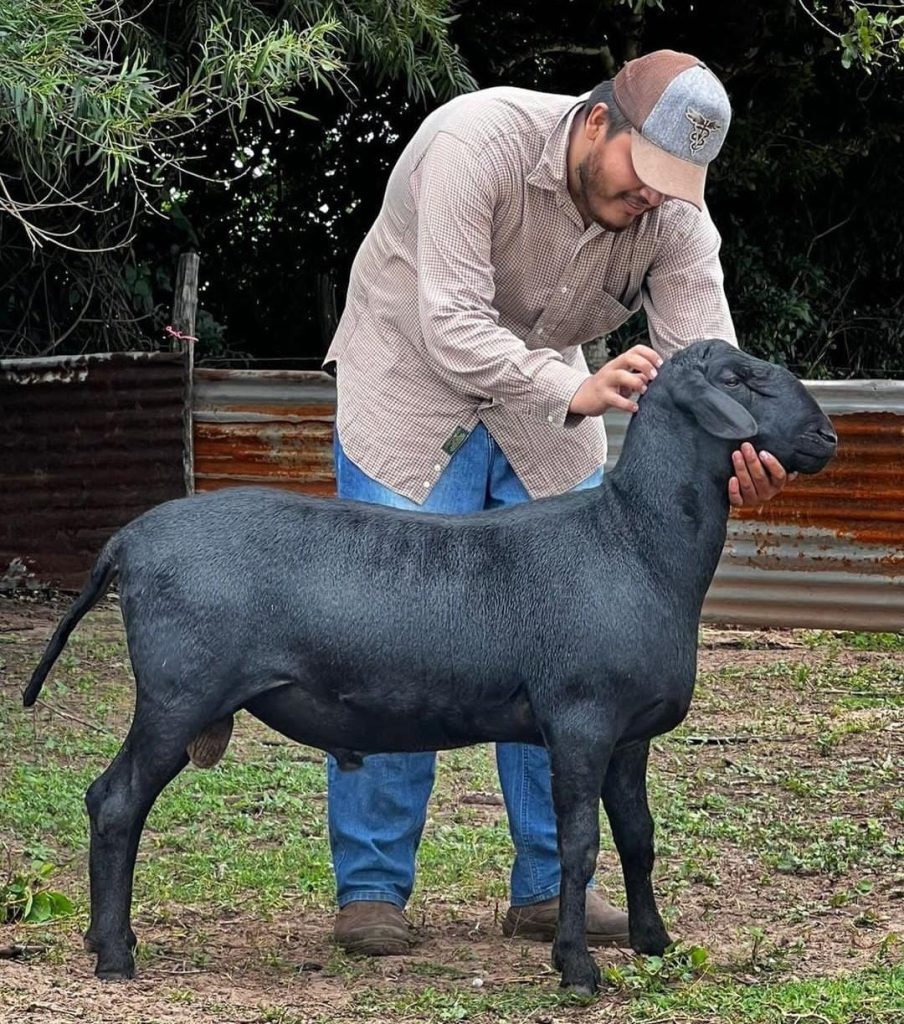
The Santa Inés breed of sheep is a medium-sized breed, with an average height of about 60-70 cm and an adult weight of between 80 and 120 kg for males, and between 60 and 85 kg for adult females. Their fur is silky and short, white, black and reddish, their hair allows them to adapt to high temperatures.
The males have a large, somewhat Roman head, while the females have a small and more stylized head than the males. Both sexes have large, drooping ears and a short, thin tail.
Racial characteristics of the Santa Inés sheep breed
Head:
Medium in size and in proportion to the body, with a semi-convex profile, lance-shaped ears firmly placed and slightly above the eye line, sloping slightly towards the length of the head and covered with hair. The eyes are round and bright, the chamfer is smooth with fine hair, the snout is wide and pigmented with well-spaced and dilated nasal cavities, and the jaws are strong and symmetrical.
Neck:
Of regular size and proportionate to the body, well muscled, with harmonious implantation in the body. In females it is longer.
Body:
Large and long torso, with a wide, straight back tending to be horizontal, and good muscle coverage. The chest is wide and rounded with good muscle mass, and the ribs are long and wide. The belly is wide, deep and with good storage capacity, and the hips are muscular, rounded and well separated. The rump is wide, long and gently sloping, and the tail has a harmonious insertion, proportional tapering and medium length.
Members:
Strong, well positioned and proportioned to the body, with strong joints and good straightness. The forelimbs have paddles adjusted correctly to the oblique position, and the hindlimbs have wide, long thighs with good muscle coverage. Black hooves are allowed on animals with black fur and white or light striped hooves on animals with a different coat.
Genital organs:
Well-developed symmetrical testicles, with a circumference of 30 cm (from 12 months), scrotum with flexible and loose skin, foreskin directed cranially, which does not exceed 45º with the ventral line, and well-formed vulva with development according to the age of the female.
Colors:
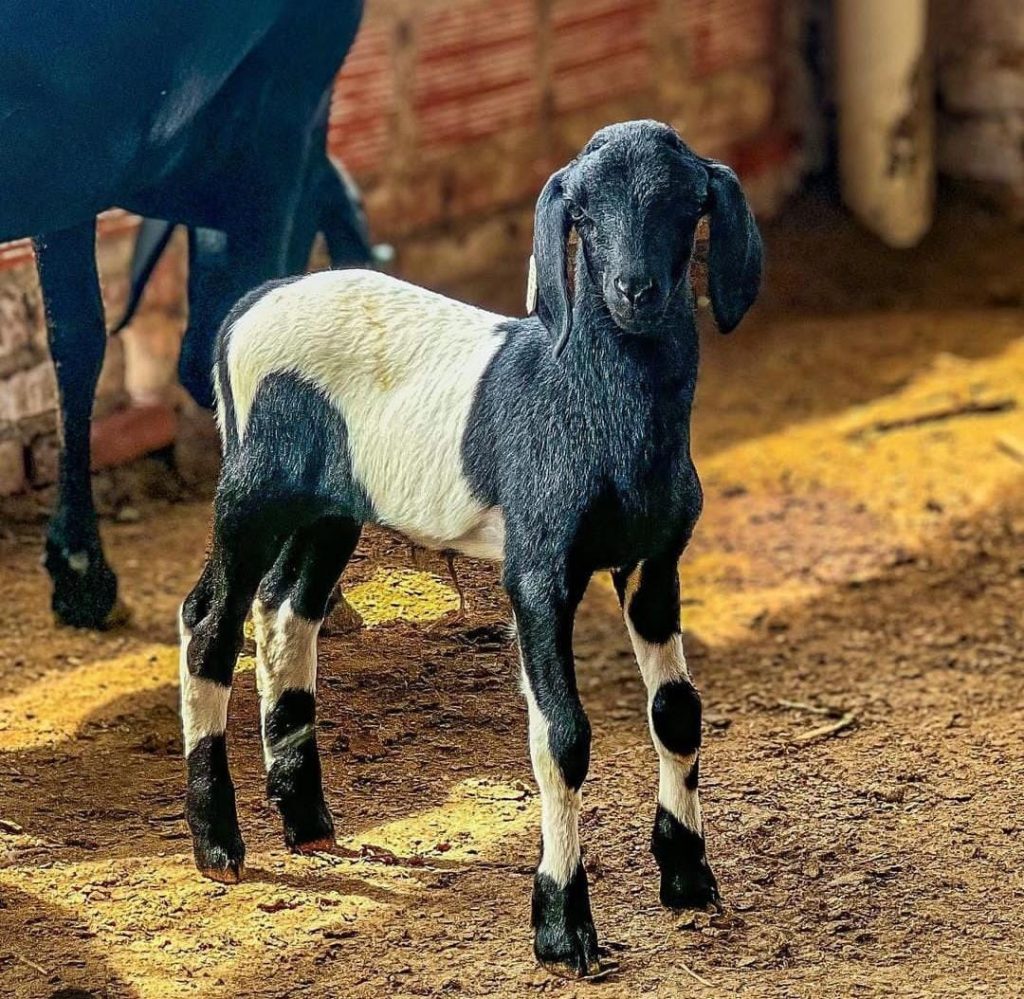
The Santa Inés breed is characterized by different coats, including white (completely white coat with white mucous membranes and hooves permitted), chitada or spotted (white coat with black and brown spots scattered throughout the body), red (completely red coat) and black (completely black coat), a popularly known color.
Productive and reproductive characteristics of the Santa Inés sheep breed
The Santa Inés breed of sheep is known for its high productivity in terms of high-quality meat and leather. Males have a rapid growth rate, allowing them to reach a suitable weight for slaughter within 6 to 8 months. The meat of Santa Inés sheep is tender and juicy, with a low fat content and a mild flavor.
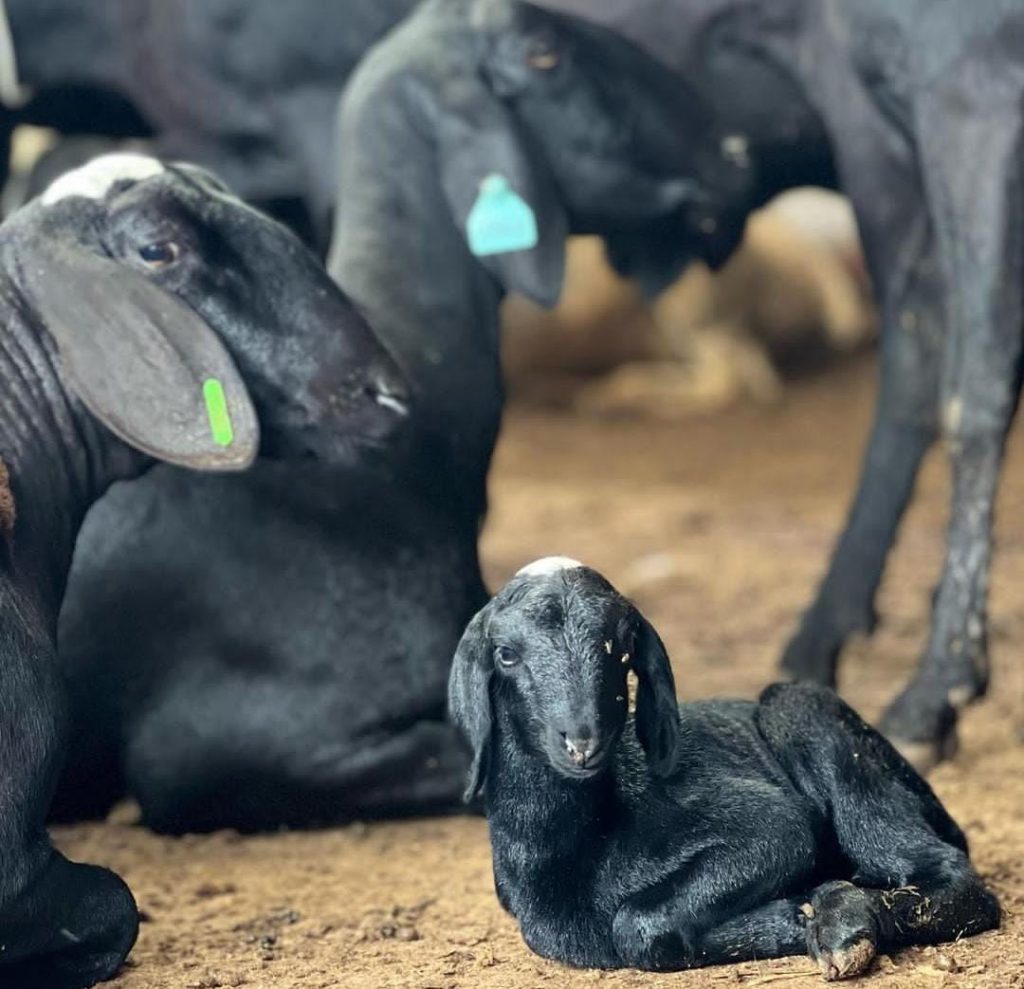
Females are very prolific, with a reproduction rate of between 120 and 130%, meaning they can produce more than one lamb per year. Additionally, they have good lactation ability, allowing them to feed their young with nutrient-rich milk.
Adaptability and advantages
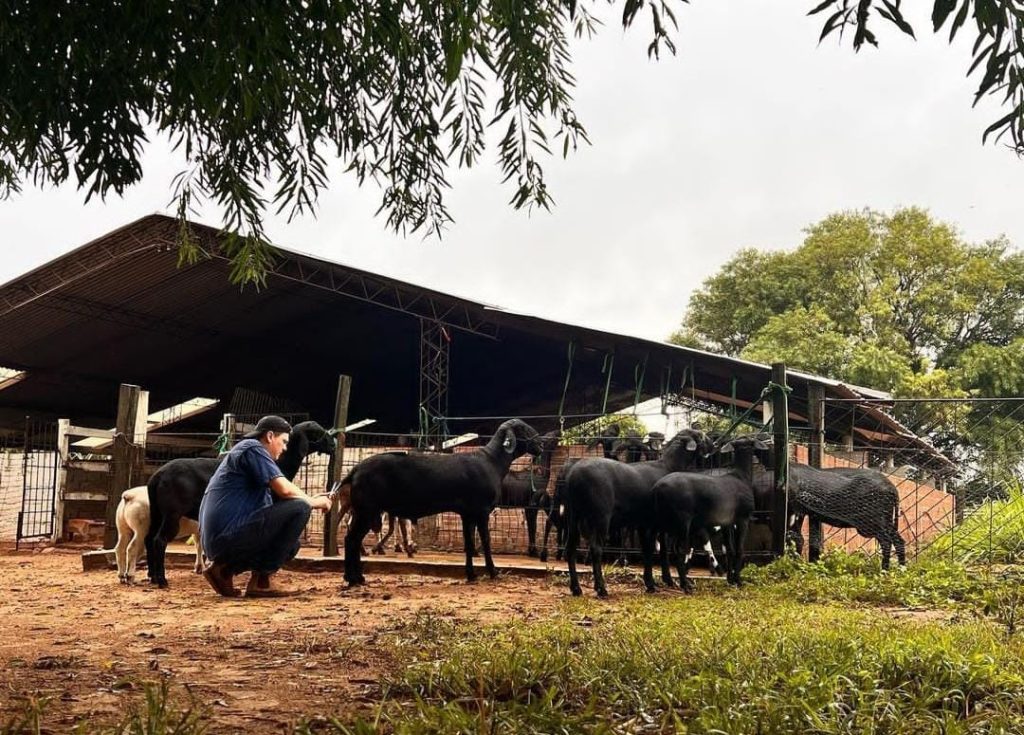
The Santa Inés breed of sheep is known for its high adaptability to the climatic and grazing conditions of tropical and subtropical areas. They can survive in areas of high humidity and extreme temperatures, and are resistant to diseases and external parasites.
Another advantage of the Santa Inés breed is its ability to produce high-quality meat and leather under grazing conditions, making them profitable for producers. Furthermore, they are easy to handle and do not require special care in terms of feeding and sanitary management.
Disadvantages
Although the Santa Inés sheep breed has many advantages, it also has some disadvantages. One of them is that they are not as prolific as other breeds of sheep, such as theDorperwaveKatahdin, meaning they can produce fewer offspring per year. Additionally, although they are resistant to some diseases, such as hoof rot, they are vulnerable to other diseases, which can affect their productivity.
Another disadvantage is that the Santa Inés sheep breed is not as popular in international markets as other sheep breeds, such as theTexel Sheep Breed,Hampshire Downor Suffolk, which can limit sales opportunities for producers.
In summary, the Santa Inés breed of sheep is a breed of sheep native to Brazil, which is characterized by its high adaptability to the climatic and grazing conditions of tropical and subtropical areas. Both males and females have unique morphological and phenotypic characteristics, and are highly productive in terms of meat and leather (remember that they do not have wool). Although they have some disadvantages, such as a lower reproduction rate and vulnerability to some diseases, they remain a popular breed among sheep producers in Brazil and other countries in the region.
Specific defects that the Santa Inés breed does not meet
These are the specific defects that disqualify the Santa Inés breed:
- Concave, straight or ultra-convex profile.
- White tail tips in black-capped specimens.
- Remnants of persistent lanugo.
In addition, general disqualifying defects in sheep of foreign origin include the following:
Females:
- Presence of functional supernumerary nipples.
- Pronounced prognathism or agnatism.
- Obvious hermaphroditism.
- Defects in the reproductive organs.
- Non-acquired permanent physical defects.
Males:
- Presence of functional or supernumerary nipples.
- Obvious hermaphroditism.
- Pronounced prognathism or agnatism.
- Defects in the reproductive organs.
- Non-acquired permanent physical defects.
Additionally, allowable features include the following:
- Convex profile.
- Elongated ears that do not extend beyond the corner of the mouth.
- Little prominent chest.
- A small depression is allowed after the withers in the dorsal region.
- Tail with a wide base of insertion and length to the hock.
- Girths are allowed, except on black-skinned animals.
- Testicles with a circumference of 28 cm at 12 months of age.
- Little skin pigmentation.
- Thick fur and traces of wool that are not persistent in the dorso-lumbar region.
- Nose, eye perimeter, vulva and perineum slightly light.
Countries that produce the Santa Inés breed
The Santa Inés breed of sheep is native to Brazil and is widely bred in that country. However, it has also spread to other Latin American countries, where it has established itself as a popular breed among sheep producers.
Some of the Latin American countries where the Santa Inés breed of sheep is raised include:
- Argentina
- Bolivia
- Colombia
- Costa Rica
- Ecuador
- Mexico
- Paraguay
- Peru
- Venezuela
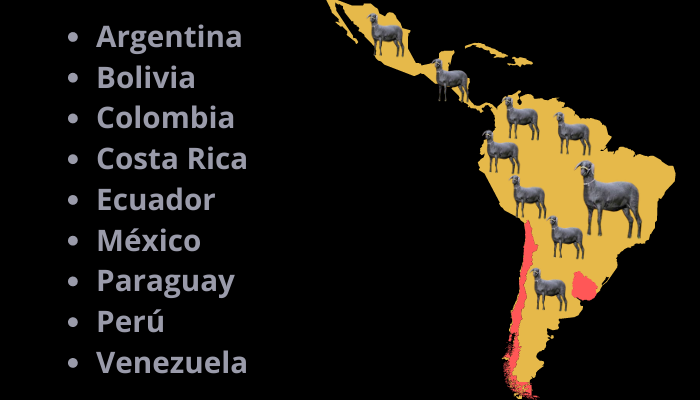
In some of these countries, the Santa Inés breed of sheep has been crossed with other breeds of sheep to produce hybrids that are suitable for local conditions and that offer greater productivity. For example, in Colombia the Santa Inés breed of sheep has been crossed with theDorper sheep breedto produce the hybrid called “Dorsan”, which adapts well to the climatic and grazing conditions of the hot and humid areas of the country. There are few trials of this hybrid cross but it is being tested.
The images shared in this article have been courtesy of the Buen Retiro Sheep Genetics Cabin. To learn more about this cabin and its services, we invite you to follow them by clicking here –>@OVINOSBUENRETIRO

You can download OvinApp from the Apple Store or from Google Play, depending on the device you have, by clicking on the following images.


If you want to learn how to use all the tools it offers youOvinApp?
- Follow the following link if you want to knowhow to create your first sheep or goat in OvinApp.
- Do you want to find out a little more abouthow to control and manage sheep production with OvinApp.
- You can also click on the WhatsApp button and contact us.
You can see ourYouTube Channelwhere we explain thestep by stephow to start your journey withOvinApp!
You can alsofollow OvinApp on Facebook,OvinApp on YoutubeandOvinApp on Instagram.