
Ovelha Dorper: Características, Vantagens e Produção de Carne
April 6, 2026Sheep Breed | Frisian Milchschaf
April 29, 2026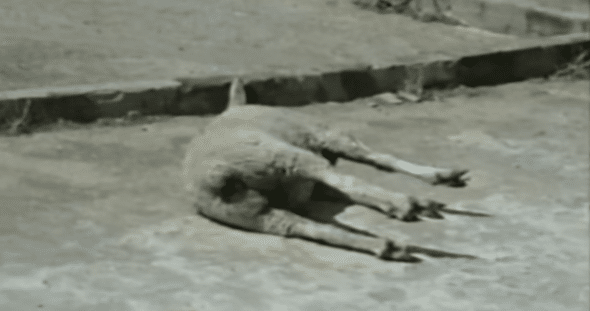
Clostridial Diseases Overview
Clostridium perfringens causes multiple disease syndromes: Type C causes enterotoxemia and dysentery; Type D causes enterotoxemia and pulpy kidney disease. Black leg (C. chauvoei) causes muscle necrosis and sudden death.
Type D enterotoxemia: the toxin is produced in the intestine
Enterotoxemia caused by Clostridium perfringens type D, known as pulpy kidney, affects sheep and goats. Epsilon toxin, its main virulence factor, is produced in the intestine, not in the rumen. Spores are ingested with food or water contaminated by soil; they germinate in the intestine and, when the intestinal environment changes, the bacterium multiplies and releases toxin. That toxin increases mucosal permeability and passes into the blood, from where it reaches organs such as the brain and the kidney (MSD Veterinary Manual, enterotoxemias).
Predisposing factors include large amounts of grain or concentrates and access to very lush pastures. A sudden intake of starch is one of the risk mechanisms. Part of the starch is not digested in the rumen, reaches the intestine and serves as a substrate for C. perfringens type D to proliferate. That is why the risk does not depend only on how much the animal eats, but on how that feed is introduced and on the transition between diets (MSD Veterinary Manual, enterotoxemias).
Signs in sheep and differences from goats
In sheep, many cases present as sudden death or with a very short course. When signs are present, they are usually neurological and respiratory: teeth grinding, staggering, hyperesthesia, opisthotonos, convulsions, blindness or head pressing against objects. Some lambs die without prior signs. In vaccinated animals, subacute or chronic forms may be seen. Hyperglycemia or glycosuria do not appear consistently and are not enough to confirm the diagnosis (MSD Veterinary Manual, enterotoxemias).
In goats the course also ranges from peracute to chronic. The acute form resembles that of sheep and predominates in young unvaccinated animals. Adults may present a subacute form with diarrhea, sometimes hemorrhagic, neurological or respiratory signs and death within a few days. In vaccinated goats a chronic form is described, with watery diarrhea, weakness, weight loss and decreased milk production. Focal symmetrical encephalomalacia may be observed in sheep, although it is not a frequent finding, and it is rare in goats (MSD Veterinary Manual, enterotoxemias).
Pulpy kidney: a finding, not a definitive test
The name pulpy kidney comes from the rapid autolysis of the kidney after death. It is a compatible finding, but not a definitive test: it does not always appear in young lambs and is rarely found in goats or cattle. The diagnosis relies on history, signs, lesions and detection of epsilon toxin in intestinal content. Isolating the bacterium from the intestine does not confirm the diagnosis on its own, because it may also be present in healthy animals. Focal symmetrical encephalomalacia, when present, is considered pathognomonic (MSD Veterinary Manual, enterotoxemias).
Tetanus
Tetanus is produced by the toxin of Clostridium tetani, a bacterium that lives in soil and in the intestine and enters through deep or contaminated wounds. In lambs it is usually associated with tail docking, castration or the navel. The characteristic signs are muscle rigidity, stiff gait, difficulty opening the mouth, erect ears, stiff tail, prolapse of the third eyelid, hyperesthesia and bloat. Consciousness is not affected. Prevention is based on hygiene, asepsis in procedures, wound disinfection and vaccination indicated by the veterinarian (MSD Veterinary Manual, tetanus).
Blackleg (clostridial myositis)
Blackleg, a form of clostridial myositis, is a clostridial disease caused by Clostridium chauvoei. In sheep it almost always presents as a wound infection, after shearing cuts, tail docking or castration. It is characterized by edematous, crepitant swelling of the musculature, with pain, fever, marked lameness and rapid progression; the skin may become cold and insensitive. Treatment is an emergency and is defined by the veterinarian. Prevention combines careful wound management, asepsis and vaccination according to risk and product directions (MSD Veterinary Manual, blackleg).
Blackleg is not the same as anthrax, caused by Bacillus anthracis. MSD, anthrax. They are different diseases, with different causative agents, and that difference matters for what to do when an animal is found dead.
Vaccination: a contextual plan, not a universal calendar
Vaccination against clostridial diseases is not settled with a single calendar. The choice and the sequence depend on the authorized product, the species, the age, the flock’s history, the area’s risk, the production system and the veterinarian’s indication. The product label defines the doses, the route and the intervals; a schedule from another species, another product or another country should not be transferred. It is also appropriate to verify that the product is authorized for the species and the country, and to observe the withdrawal periods stated on the label (MSD Veterinary Manual, enterotoxemias).
In ewes and goats, vaccinating the mother before lambing or kidding aims to transfer antibodies through colostrum. That maternal protection is valuable, but it does not replace the lamb’s or kid’s own series: the animal needs its own schedule to become immunized. The professional manual describes initial two-dose series for sheep, with later boosters, and notes that goats often require more frequent boosters; the label and the veterinarian’s indication always prevail (MSD Veterinary Manual, enterotoxemias).
The SUL monthly recommendations for October indicate the first dose of primary vaccination at marking and a revaccination at 20 days (SUL, October recommendations). The November page again mentions the revaccination of lambs and ewe lambs (SUL, November recommendations). The November mention does not imply an automatic third dose: it should be interpreted together with each lot’s primary vaccination history. The 20 days are the recommendation of that page; the definitive interval comes from the label and from veterinary judgment, and it should not become a universal rule for all flocks.
In Uruguay, November is spring, but the month alone does not require vaccination or a change of plan. What adjusts risk is the animals’ category, weaning, management, feeding and climate and area conditions. A rainfall event does not define a dose: the decision is made on the basis of flock status and professional indication (SUL, November recommendations).
Diet, concentrates, pastures and creep feeding
Feeding is part of control. Diet changes should be gradual, especially when concentrates are introduced or when moving to more lush pastures. In lamb rearing, creep feeding, or a feeder with exclusive access, helps order consumption and accompany the transition, but it must be managed with hygiene and without excesses (OvinApp, creep feeding). For weaning, SUL recommends preparing a sheep-free paddock with fine pasture, water and shade (SUL, October recommendations). No single measure guarantees prevention.
Urgent consultation, without fatalism
The speed of these diseases should not lead to fatalism. That a condition is serious does not mean there is nothing to be done: consulting in time allows the animal to be evaluated, management to be organized, feeding to be reviewed and new cases in the flock to be prevented. Do not administer products or change diets on your own.
In the event of sudden death, do not open the carcass on your own: some diseases with that presentation can be zoonoses and handling the remains increases the risk to people. Report the case to the veterinarian immediately and follow their instructions (MSD, risk of opening suspicious carcasses).
Ovine clostridial disease: frequently asked questions
What is enterotoxemia in sheep?
Ovine enterotoxemia associated with Clostridium perfringens type D is a toxemic condition: the bacterium produces its toxin in the intestine, not in the rumen, and that toxin triggers the damage (MSD Veterinary Manual). The name refers to a toxin of intestinal origin, not to an abnormal rumen fermentation.
When should vaccination be given?
The timing and the schedule must follow the vaccine label and the veterinarian’s indication. There is no single date valid for all categories or for all farms. Age, physiological status, the available product and vaccination history are part of that decision. A schedule from another farm cannot simply be transferred.
What applies in November in Uruguay?
In Uruguay, the SUL page for October indicates the first vaccination and the 20 days stated there, according to that page. The November page raises revaccination, not an automatic third application or a universal interval for all cases (SUL, October; SUL, November). That reading does not turn an October indication into a fixed rule for November.
Does the vaccine replace the diet transition?
No. Vaccination does not replace the gradual diet transition. A sudden change of feed is a factor associated with enterotoxemia, and feed management plays a different role from vaccination; the two measures are not interchangeable (MSD Veterinary Manual). Vaccination and feeding act on different levels within prevention. One does not compensate for the lack of the other.
Conclusion
Type D enterotoxemia, tetanus and blackleg share a clostridial origin, but they do not manifest or are prevented in the same way. Understanding that the enterotoxemia toxin is produced in the intestine, that pulpy kidney does not confirm the disease on its own and that vaccination is designed case by case helps organize decisions. The most valuable tool remains timely veterinary consultation.