
Sheep Reproduction: Estrous Cycle, Fertility, and Probable Lambing Date
November 21, 2026Sheep Dewormer Dosage Calculator: Intramuscular and Subcutaneous Injection Guide for Sheep and Goats
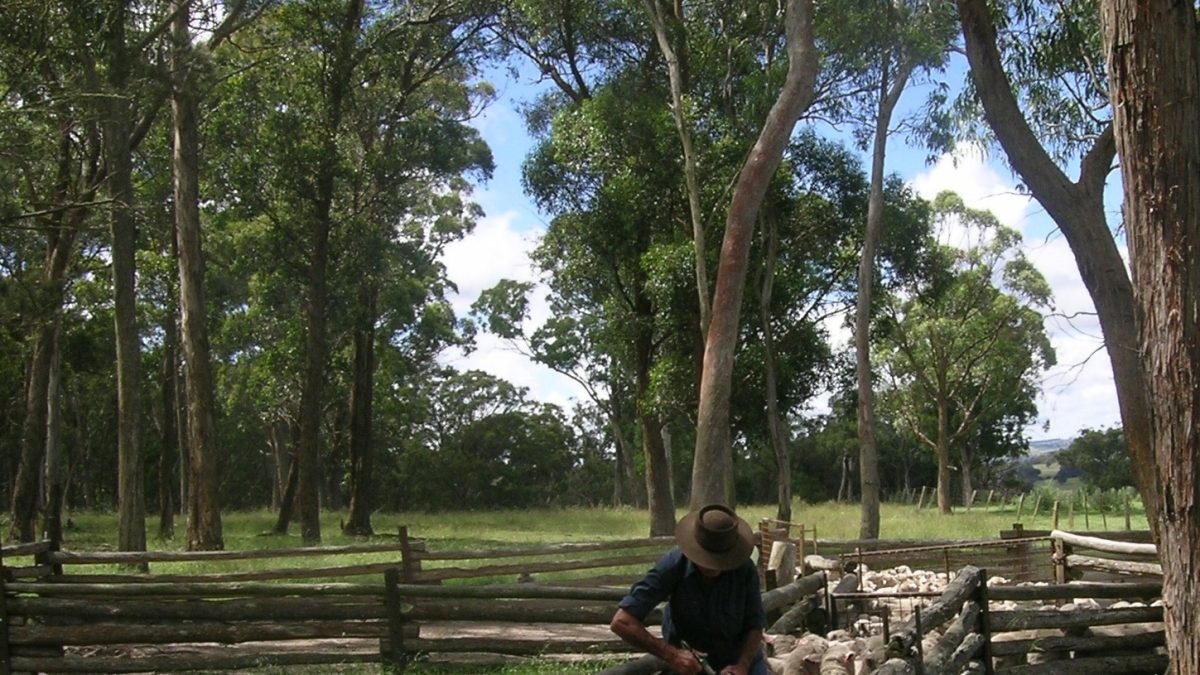
Cgoodwin, Wikimedia Commons, CC BY 3.0. File:Sheep_drenching.JPG.
Calculate milliliters only when you have three verified numbers: the animal’s actual weight, the dose in mg/kg for its species, and the exact concentration on your bottle. The calculator is a guide: it does not diagnose, choose the product, or replace your veterinarian. Check the local label and withdrawal time before you treat; in goats, most of these doses are extra-label in the U.S. and require a veterinarian-client-patient relationship.
Working out the milliliters is the easy part. What decides whether the treatment works — and whether meat or milk reaches the table clean — is having weighed the animal, read the label and chosen the right route. This guide brings together the sheep and goat dewormer doses in the ACSRPC/UGA November 2024 charts and ACSRPC’s good-practice rules. Your local label and your veterinarian have the final say.
If you came looking for where to inject, that section is below. If you came looking for how many ml to give, start with the calculator and then read the formula.
Sheep and goat dewormer dose calculator
Calculator
Dewormer dose by live weight
Enter the species, live weight (that animal’s weight, or the heaviest in the group if you will use one volume for all — except levamisole), the active ingredient, and the concentration on YOUR label in mg/ml. The tool estimates ml per animal using the oral doses in the American Consortium for Small Ruminant Parasite Control charts (November 2024).
Sources: ACSRPC sheep chart and ACSRPC goat chart (November 2024). Best practices: proper use of dewormers.
The calculator turns weight and dose into milliliters. It uses the oral doses in the chart: it does not calculate injectables or pour-on. It does not choose the product, interpret symptoms or replace a prescription. Have your bottle in front of you before you use it: concentration changes from brand to brand and country to country, and the default value is only the U.S. product listed in the chart.
Choose the species, weight, active ingredient and the concentration on your label. If you are going to treat a group with one volume, read the weighing section first: levamisole is an important exception.
How the ml dose is calculated
The formula is simple:
ml = (animal weight in kg × dose in mg/kg) ÷ product concentration in mg/ml
The units must be consistent: weight in kilograms, dose in mg/kg and concentration in mg/ml. Weight is measured, not estimated. The dose in mg/kg comes from the label, the ACSRPC chart or your veterinarian. The concentration comes from your bottle: not from this article, not from a generic table and not from the syringe.
Arithmetic example only, using a product from the chart: 50 kg × 7.5 mg/kg ÷ 113.6 mg/ml = 3.3 ml. That result is not a recommendation for your animal; it is the calculation with those three numbers. If your bottle has a different concentration, the volume changes even when the active ingredient is the same.
Watch the units: make sure the concentration is in mg/ml. If your label uses another unit, convert it before dividing or ask your veterinarian. And do not carry milliliters from one brand to another: two bottles with the same active ingredient can have different concentrations.
Reference table
| Species | Active ingredient | Oral dose (mg/kg) | Reference concentration (mg/ml) | Meat withdrawal (days, U.S.) | Milk withdrawal (days, U.S.) | Notes |
|---|---|---|---|---|---|---|
| Sheep | Albendazole | 7.5 | 113.6 | 7 | — | Approved in sheep in the U.S. Do not use in the first trimester (45 days) or for 45 days after the ram is removed. No uniform milk withhold in the sheep chart. |
| Sheep | Ivermectin | 0.2 | 0.8 | 11 | — | Approved. Protect from light. Do not give cattle or pig injectables by mouth. |
| Sheep | Levamisole | 8 | 49.6 | 3 | — | Approved. 52 g in 943 ml = 49.6 mg/ml. Narrow margin; for lambs, dilute further and give twice the volume. |
| Sheep | Moxidectin | 0.2 | 1 | 7 | — | Approved. Sheep oral drench only, not cattle pour-on. |
| Goat | Albendazole | 20 | 113.6 | 10 | 10 | Extra-label. Withdrawal 10/10. Same pregnancy warning. |
| Goat | Fenbendazole | 10 | 100 | 16 | 12 | Label dose 5 mg/kg; the chart recommends 10 mg/kg for roundworms (also extra-label). Withdrawal times are at 10 mg/kg; add 1 day for each extra day of use. |
| Goat | Ivermectin | 0.4 | 0.8 | 20 | 20 | Extra-label. Sheep oral drench. |
| Goat | Levamisole | 12 | 49.6 | 12 | 5 | Extra-label. 1.5× the sheep dose, not double. Same dilution note for kids. |
| Goat | Moxidectin | 0.4 | 1 | 23 | 19 | Extra-label. Withdrawal times apply only to this drench and dose. Not cattle pour-on or injectable. |
Oral doses from the ACSRPC November 2024 charts. The reference concentration is the U.S. product cited in the chart; always use the one on your label. Withdrawal times may not apply in your country.
The table is built from the ACSRPC/UGA November 2024 charts for sheep and the goat chart. These are U.S. products and concentrations: they help you understand the logic and compare, not copy milliliters blindly into another country.
For sheep, the official chart lists albendazole, ivermectin, levamisole and moxidectin. Fenbendazole is not on that sheep chart, which is why the calculator does not offer it for sheep. For goats, the chart adds fenbendazole and mentions morantel; morantel is not in the calculator because its concentration varies widely between brands and the chart dose is given in grams of a specific premix.
How to weigh without guessing
The scale is the starting point. ACSRPC insists on weighing each animal: underdosing can make treatment fail and selects for resistant parasites. In goats, weigh tapes may be accurate, according to ACSRPC. In sheep with wool, that wool is not body weight: weigh the animal and subtract an estimate for the fleece, using your veterinarian’s judgment.
If you cannot weigh every animal, group them by size and calculate from the heaviest animal in each group. That single-volume rule comes from SDSU Extension (February 9, 2024), which adapts the ACSRPC charts, not from ACSRPC itself: if you use one dose for the group, base it on the heaviest animal. The exception is levamisole, which should be dosed animal by animal because of its narrow safety margin.
“Heaviest” is not permission to estimate. It is the fallback when there is no scale. Weighing is still the priority, especially if you are combining products or your group has animals of very different sizes.
Sheep vs. goats: why the dose changes
ACSRPC explains it in its good-practice fact sheet: goats metabolize dewormers faster than sheep and, in most cases, the dose is doubled. Levamisole is the exception: use 1.5 times the sheep dose, not double.
Sheep (oral route)
According to the ACSRPC/UGA sheep chart (November 2024):
- Albendazole 7.5 mg/kg. Reference product: Valbazen 113.6 mg/ml. U.S. meat withdrawal: 7 days. The sheep chart does not give a uniform milk withdrawal. Do not use in the first trimester of pregnancy (45 days) or for 45 days after the ram is removed.
- Ivermectin 0.2 mg/kg. Ivomec Sheep Drench 0.8 mg/ml. Meat withdrawal: 11 days. Protect from light. Do not give cattle or swine injectables by mouth.
- Levamisole 8 mg/kg. Prohibit/LevaMed: 52 g in 943 ml = 49.6 mg/ml. Meat withdrawal: 3 days. For lambs, the chart suggests diluting further (one packet in two quarts of water) and giving twice the volume. Narrow margin: ACSRPC warns that a sizable overdose can be toxic, with signs from 2×.
- Moxidectin 0.2 mg/kg. Cydectin Sheep Drench 1 mg/ml. Meat withdrawal: 7 days. Always the sheep oral drench; never cattle pour-on by mouth.
- Fenbendazole: not on the official November 2024 sheep chart. That is why it is not in the calculator.
Goats (oral route)
In the U.S., almost all of these uses are extra-label and require a valid veterinarian-client-patient relationship, according to the goat chart. The local label takes precedence.
- Albendazole 20 mg/kg. Withdrawal: 10 days meat and 10 days milk. Same pregnancy warning: first trimester (45 days) and for 45 days after the male is removed. Extra-label.
- Fenbendazole: the label dose is 5 mg/kg; ACSRPC recommends 10 mg/kg for roundworms (also extra-label). At 10 mg/kg: 16 days meat and 12 days milk, plus 1 day for each additional day of use. The calculator uses 10 mg/kg. The 15 mg/kg dose is “usually effective” for tapeworms, but it is not on the label and is not the calculator dose.
- Ivermectin 0.4 mg/kg. Withdrawal: 20 days meat and 20 days milk. Extra-label. Use the sheep oral drench.
- Levamisole 12 mg/kg (1.5× the sheep dose, not double). Withdrawal: 12 days meat and 5 days milk. Extra-label. Same dilution note for kids.
- Moxidectin 0.4 mg/kg orally, with the sheep drench. A single dose: 23 days meat and 19 days milk, only for that drench and that dose. Extra-label. The chart prefers the oral route and advises against the injectable; if the cattle injectable were used, FARAD suggests a 120–130 day meat withdrawal. The calculator does not offer injectable or pour-on.
- Morantel: the goat chart mentions it at 10 mg/kg, 0 days milk withdrawal and 30 days meat. You will not find it in the calculator: concentration varies widely between brands and the chart dose is in grams of a specific premix, not milliliters.
Resistance: treat less, treat better
Resistance is not fixed by changing products every season. It is slowed by using the right dose, the right route and treating only the animals that need it.
ACSRPC recommends selective treatment with tools such as the Famacha method or the Five Point Check: you assess each animal and treat the one with an indication, not the whole group out of habit. Treating the whole flock or herd, especially with combinations, makes resistance appear quickly.
Combining different classes can be part of a strategy, but it is done selectively: one after the other, with separate syringes, never mixed in the same barrel. ACSRPC is clear that different drugs are not chemically compatible in the same syringe. If you combine, the withdrawal time that applies is the longest of the products used.
And do not forget the other extreme: underdosing also selects for resistance. Weighing and calculating properly is not paperwork; it is part of resistance control.
How to apply: oral, intramuscular and subcutaneous
This is the part people search for most, and the part most often improvised. The general rule is simple: the label defines the route, dose and product; technique makes sure the product arrives complete and clean.
Before you open the medicine cabinet
Store products in a clean, dry place, out of reach of children and animals, at moderate temperatures and away from direct sun. Check expiry dates and discard what is out of date: it does not start working again with time. Keep graduated syringes, needles and cannulas clean, and have a rigid container for used material.
Read the label before loading the syringe: active ingredient, target species, expiry date, route, dose, precautions and withdrawal time. If the container says shake, shake it to mix. Do not invent a target species or a route: a cattle product does not become suitable for sheep because you change the needle.
The handling environment matters too. Move animals calmly into the handling race, without dogs that upset them and without rushing. A calm animal moves less, and a clean application starts there. This applies to dewormers, vaccines and antibiotics.
Write down the product, batch, date and withdrawal time before you start. Do not rely on memory.
Oral route
Use only oral formulations designed for small ruminants. The formulation matters: cattle pour-on is not a drench, and an injectable is not given by mouth. For drenching, use a graduated syringe with a rounded tip and a cannula with the right bend, aimed at the inside of the cheek. Choose the cannula size for a lamb, a kid or an adult.
Lift the animal’s head slightly, without forcing it, rest the cannula at the corner of the mouth and deliver the product slowly, letting the animal swallow. If it spits part of the dose out, do not assume it received the full amount: drench again. Delivering too fast increases the risk of liquid going where it should not.
For levamisole, follow the dilution on the label. For lambs and kids, the chart suggests a higher dilution and twice the volume. This is not a product to adjust by eye: the margin is narrow.
Intramuscular injection
Intramuscular injections can be given with the animal standing and properly restrained. Choose a clean, lean muscle site, and avoid joints, inflamed areas and the center of the hindquarter, which is the highest-value cut. Alternate sides and sites between animals so you are not always using the same muscle.
Use a needle that suits the animal’s size and the volume, and make sure it is clean and sharp. Insert at a right angle (about 90°), inject without forcing and withdraw carefully. Do not reuse needles between animals if you can avoid it.
Subcutaneous injection
Subcutaneous means under the skin, not into the muscle. Common sites are the groin, the flank and behind the shoulder, depending on the animal’s size and condition. Lift a fold of skin, make a firm tent and place the needle at about 45°.
Deposit the product and withdraw the needle; check that no liquid comes back and that no bubbles suggest the product ended up in the wrong place. If product comes back, do not insist: ask your veterinarian.
The subcutaneous needle is shorter than the intramuscular one; the exact size depends on the product and the animal. Do not use the same needle for everything because it is convenient.
Holding the syringe
Hold the syringe firmly, with your thumb on the plunger, and dose without rushing. If you use a drench gun, calibrate it before you start and check that it delivers the same dose several times. A gun that under-delivers is a silent source of underdosing.
One syringe per product: do not mix different drugs in the same barrel. They are not chemically compatible, and you also lose control of how much of each one each animal received.
When you finish, clean syringes, cannulas and needles, store everything dry and dispose of used material in a rigid container. Cleanliness is not cosmetic: a dirty needle can end in an abscess or a local infection.
Withdrawal times and records
The withdrawal time is the minimum period between treatment and slaughter or milk sale. The numbers in the sheep chart and goat chart are for U.S. products; for goats, FARAD as of the chart date. They change by country, brand and formulation. The local label and your veterinarian take precedence over any table. In sheep, the chart does not give a uniform milk withdrawal; that does not mean zero, only that no single value has been established.
Record the product and active ingredient, concentration, dose in ml, animal weight, date, route, batch, animal or group, and the date the withdrawal ends. If you sell milk or meat, that record is the difference between complying and having a problem. If you combined products, record the longest withdrawal.
If an animal shows an unusual reaction after treatment, call your veterinarian and write down what you saw. Do not adjust the next dose by intuition.
Sources
- ACSRPC/UGA sheep dewormer chart (November 2024)
- ACSRPC/UGA goat dewormer chart (November 2024)
- ACSRPC good practices for proper dewormer use (June 2024)
- WormX dewormer index
- SDSU Extension, “Are Your Dewormers Effective For Your Sheep or Goat?” (February 9, 2024)
Doses and withdrawals come from the ACSRPC/UGA charts. The rule about using the heaviest animal when dosing a group with one volume is cited separately because it comes from SDSU Extension, not ACSRPC.
Calculate, apply, record
OvinApp lets you record health treatments and withdrawal times, so you know what was given, when and until what date. See the sheep and goat app or visit the animal health help center. The free plan allows up to 20 animals.
Frequently asked questions
Can I use the sheep dose in a goat?
No. Goats metabolize dewormers faster and, in most cases, need double the sheep dose; levamisole is the exception at 1.5×. Using the sheep dose underdoses the goat and promotes resistance. In the U.S., almost all of these goat uses are extra-label and require a veterinarian-client-patient relationship.
Why isn’t fenbendazole included for sheep?
Because it is not on the official ACSRPC/UGA November 2024 sheep chart. That does not mean it does not exist or is never used in other countries; it means it is not in that reference, so the calculator does not offer it for sheep. If your veterinarian prescribes it, the local label and that decision take precedence.
Can I use cattle pour-on?
No. Pour-on is a topical cattle formulation, not an oral drench. Giving it by mouth is not an alternative: the formulation and route are not interchangeable. For sheep and goats, use only oral formulations designed for small ruminants.
What should I do with levamisole?
Levamisole has a narrow safety margin. Follow 8 mg/kg in sheep and 12 mg/kg in goats, the label dilution method and, for lambs or kids, the instruction to dilute further and give twice the volume. ACSRPC warns that a sizable overdose can be toxic, with signs from 2×. Do not dose it by eye.
Do these withdrawal times apply in my country?
Not necessarily. The chart withdrawal times are for U.S. products; for goats, FARAD as of the chart date. They change by country, brand and formulation. The local label and your veterinarian prevail.
Can I use albendazole in pregnant animals?
Not in the first trimester (45 days) of pregnancy or for 45 days after the ram or male is removed. That warning appears for both sheep and goats. If you have pregnant animals, ask your veterinarian first and do not improvise.
Can I mix dewormers in the same syringe?
No. Different drugs are not chemically compatible in the same syringe. What you can do, selectively and with veterinary advice, is give combinations of different classes one after the other, not mixed. Treating the whole group with combinations speeds up resistance.
Does the calculator replace my veterinarian?
No. It is an orientative calculation tool. It does not diagnose, choose the product or replace a prescription. Your veterinarian sets the dose, route and withdrawal time together with the local label.