

Chimichurri Sauce for Lamb: Traditional Recipe and Variations
abril 6, 2026
Merino Sheep: Characteristics, Fine Wool and Worldwide Distribution
abril 6, 2026Understanding lamb cuts is essential whether you are a producer marketing your animals, a butcher, or a consumer looking to make the most of this versatile meat. This guide covers the main primal cuts of lamb, how they differ by country naming conventions, the most valuable cuts and the best cooking methods for each.
Lamb Primal Cuts: The Big Picture
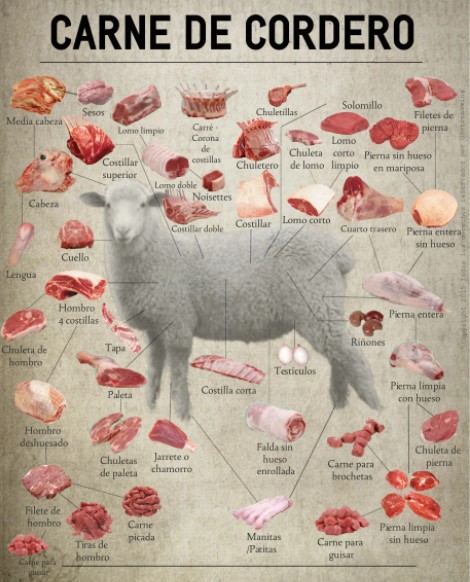
A lamb carcass is typically divided into 5 main primal sections:
- Shoulder
- Rack (Rib)
- Loin
- Leg
- Breast / Flank / Shank
Each primal yields multiple sub-primal and retail cuts. The cutting style and nomenclature vary significantly between countries — what Americans call a «rack of lamb» may be called carré de agneau in France or costillar in Argentina.
1. Leg (Pierna / Gigot)
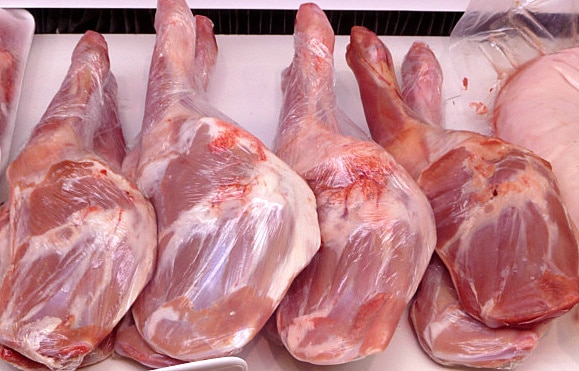
The leg is the largest and most commercially valuable cut from a lamb carcass. It comes from the hindquarter and is prized for its lean, flavorful meat.
- Bone-in leg of lamb: Traditional roasting cut — slow-roasted whole with herbs and garlic. Impressive presentation, excellent flavor.
- Boneless leg: Easier to carve, can be rolled and tied or butterflied for grilling
- Butterflied leg: Boned and opened flat — ideal for grilling over charcoal. Marinates well.
- Leg steaks / Chuletas de pierna: Cut cross-ways through the bone — quick cooking, economical
- Names by country: Leg (UK/USA) | Pierna / Pata (Latin America) | Gigot (France) | Keule (Germany)
2. Rack / Rib (Costillar / Carré)
The rack comes from the rib section and is considered the most elegant and premium lamb cut. It contains 7–8 ribs and is characterized by a tender, fine-grained muscle (longissimus dorsi) with a cap of fat.
- Rack of lamb (carré): Whole rack roasted with the rib bones «frenched» (exposed) — spectacular presentation at formal dinners
- Crown roast: Two racks curved and tied together in a crown shape
- Rib chops / Chuletas de palo: Individual chops cut from the rack — fast cooking, premium price
- Names: Rack / Rib chops (USA) | Costillar / Chuletas de palo (Latin America) | Carré (France) | Kotlett (Germany)
3. Loin (Lomo)
The loin is the section between the rack and the leg — the most tender part of the lamb. It yields the most prized individual chops.
- Loin chops: The T-bone steak equivalent in lamb — include both loin muscle and tenderloin on either side of the vertebra. Most tender and flavorful chop. Best grilled or pan-seared.
- Double loin chop (Barnsley chop): Two loin chops left joined — thick cut for pan-roasting
- Loin roast / Saddle: Both loins left on the backbone — impressive roasting joint for a large gathering
- Lamb tenderloin: Very small but extremely tender — sauté or quick-roast
- Names: Loin chops (USA) | Chuletas de lomo (Latin America) | Longe (France)
4. Shoulder (Paleta / Espalda)
The shoulder is a harder-working muscle than the leg, making it more flavorful but also tougher. It requires longer cooking to become tender.
- Whole shoulder (bone-in): Slow-roast at low temperature (4–6 hours) until pull-apart tender — a crowd-pleasing, economical cut
- Boneless shoulder: Can be rolled and tied for roasting, or cut into cubes for stew (Irish stew, tagine)
- Shoulder chops: Cut across the shoulder blade — good flavor, chewier texture, economical
- Best cooking: Low and slow — braising, slow-roasting, stewing
- Names: Shoulder (USA) | Paleta / Espalda (Latin America) | Epaule (France)
5. Breast and Ribs (Pecho / Costillas)
The breast and belly area — the most economical section of the lamb, with more fat and connective tissue but excellent flavor when properly cooked.
- Breast / Pecho: Rolled and slow-braised or roasted — rich, gelatinous, excellent for slow cooking
- Spare ribs / Costillas de falda: Grilled or slow-cooked — popular in asado (Argentine barbecue)
- Best cooking: Slow BBQ, braising, grilling over low heat
6. Shanks (Jarrete / Osobuco de Cordero)
- Front shank: Smaller, from the foreleg
- Hind shank: Larger, more meaty, from the hindleg — the most popular
- Best cooking: Long braising (osso buco style, tagine, curry) — collagen breaks down into a silky sauce
- Names: Lamb shank (USA) | Jarrete / Osobuco de cordero (Latin America) | Souris d’agneau (France)
Which Cuts Are Most Valuable?
Retail value from highest to lowest (general guide — varies by market):
- Rack / Rib chops (highest price per kg)
- Loin chops
- Leg (bone-in or boneless)
- Hind shank
- Shoulder
- Breast / Spare ribs (lowest price per kg, but high demand for barbecue)
Carcass Weight and Yield
- Dressing percentage (carcass weight as % of live weight): 44–54% depending on breed and finish
- Bone-in retail cut yield from carcass: 70–80%
- Boneless yield from carcass: 50–65%
- Example: A 35 kg live weight lamb with 50% dressing yields a 17.5 kg carcass, from which 12–14 kg of bone-in cuts can be produced
Understanding your carcass yields and the value of different cuts is essential for pricing live animals correctly and maximizing revenue in your sheep operation. Recording live weights and carcass data in OvinApp helps you track the relationship between your production inputs and the market value of your animals.