

Alpine Goat: Characteristics, Milk Production and Management
abril 6, 2026
Chimichurri Sauce for Lamb: Traditional Recipe and Variations
abril 6, 2026The Savanna goat is a white meat breed developed in South Africa, increasingly valued worldwide for its combination of good meat production, exceptional heat and drought tolerance, pigmented skin, and strong maternal instincts. Often described as the white version of the Boer, the Savanna offers an interesting alternative for producers in hot, arid environments or those looking to diversify their Boer-based crossbreeding programs.
Origin and History
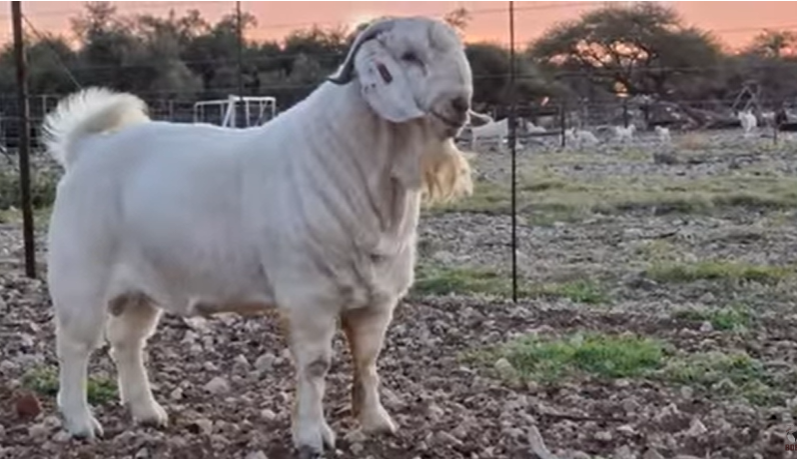
The Savanna was developed in South Africa from the early 1900s onward, primarily by the Cilliers family in the Northern Cape province. It was developed through selection of naturally occurring white animals from indigenous South African goats, selecting over generations for meat conformation, hardiness and a fully white coat with fully pigmented skin.
The Savanna Goat Breeders’ Society of South Africa was established in 1993. The breed was imported to the United States in the late 1990s and early 2000s, where it began attracting attention from producers looking for an alternative to the Boer, particularly in hot, arid regions of Texas, Oklahoma and the Southwest.
Physical Characteristics
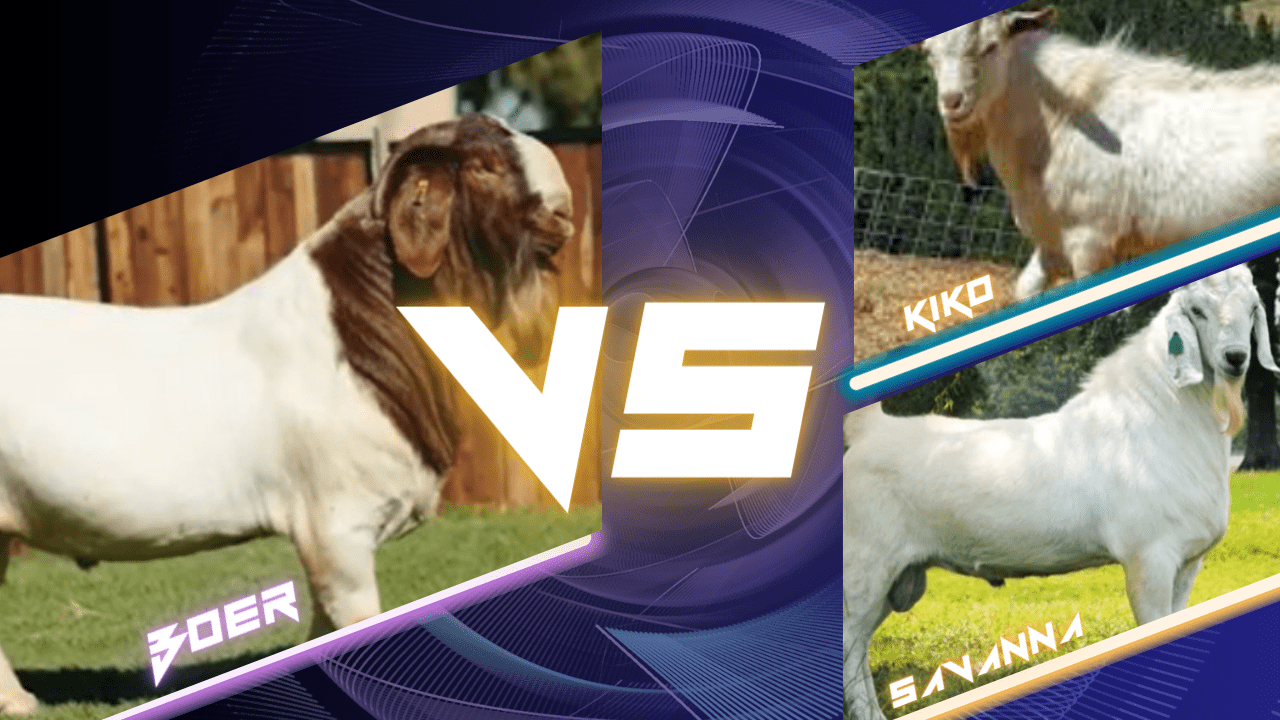
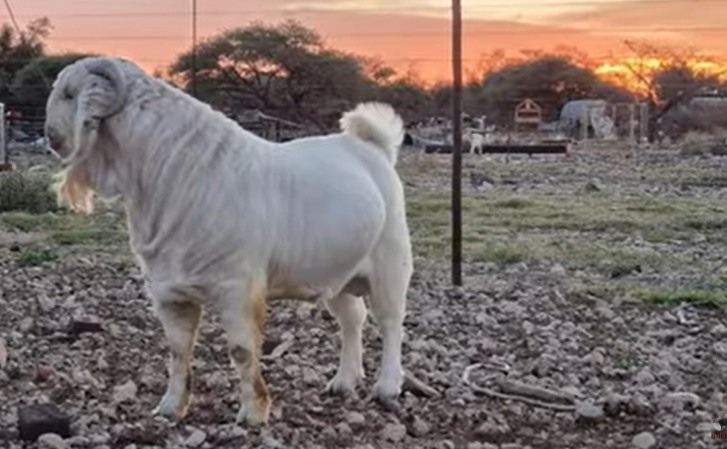
- Color: Fully white coat — the defining visual characteristic that distinguishes it from the Boer (which has a red-brown head)
- Skin: Fully pigmented (dark) under the white coat — provides UV protection in harsh sunlight
- Head: Broad, convex (Roman) profile
- Ears: Medium-long, pendulous — similar to Boer
- Horns: Both sexes are horned
- Body: Deep, wide-chested, well-muscled — good meat conformation
- Adult buck weight: 90–130 kg
- Adult doe weight: 65–90 kg
Meat Production Performance
- Average daily gain: 180–270 g/day under good nutrition
- Slaughter weight: Kids reach 28–38 kg at 4–6 months
- Dressing percentage: 46–52%
- Carcass quality: Good muscle development, fine-grained meat, appropriate fat cover
The Savanna generally shows similar meat production to the Boer under hot, arid conditions, and may slightly outperform the Boer in survival and body condition maintenance during periods of heat stress or limited forage availability.
Key Advantages Over the Boer
- Pigmented skin: The Savanna’s dark skin under its white coat provides better UV protection — reducing sunburn risk in tropical and arid environments compared to the Boer (which can have unpigmented skin areas)
- Heat and drought tolerance: Developed in the harsh Northern Cape and Karoo of South Africa — arguably better adapted to extreme aridity than the Boer, which was developed in the Eastern Cape (slightly more moderate climate)
- Mothering ability: Savanna does are generally considered to have excellent maternal instinct and good milk production relative to their size
- White color: Some markets, particularly in Muslim-majority countries, have a preference for white-coated animals for religious slaughter — the Savanna fills this niche
- Tick resistance: Anecdotal reports from South African producers suggest the Savanna shows better tick resistance than the Boer under African conditions
Reproductive Characteristics
- Year-round breeding: In tropical and subtropical conditions, Savanna does breed year-round
- Kidding rate: 150–190%
- Doe maternal ability: Excellent — strong maternal bond, good milk production for twins
- Gestation: 148–153 days
Savanna in Crossbreeding Programs
The Savanna is used in crossbreeding programs, both as a terminal sire and as a maternal breed. Key crossbreeding scenarios:
- Savanna x local breeds: Improves meat conformation and growth rate in indigenous breeds while contributing hardiness and white color
- Savanna x Boer: Used in some programs to combine the two South African meat breeds — can produce white or colored offspring depending on genetics
- Savanna x Kiko: An emerging cross in the United States, combining hardiness of both breeds
Savanna vs. Boer: Which Should You Choose?
Both are excellent South African meat breeds, but some practical differences guide the choice:
- Boer: More widely available globally; better documented production data; larger frame in most populations; more genetics/breeders available
- Savanna: Potentially better adapted to very hot, arid conditions; fully pigmented skin; white color for specific markets; good maternal ability
- Hot, dry regions: Savanna may have an edge
- Temperate regions, high-input systems: Boer is the more accessible and proven choice
Tracking growth, health events and reproductive performance for your Savanna herd in OvinApp gives you the data you need to evaluate whether the breed is meeting your production targets and making informed selection decisions to improve your herd over time.