
Diarrhea in Sheep: Causes, Treatment and Home Remedies
abril 29, 2026Goat meat production: the best breeds for your business
abril 29, 2026Introduction to the Boer Breed
The Boer breed is agoat breed originally from South Africa, known for its large size and its ability to produceTasty, soft, high-quality meat. Adult males can weigh between 110 kg to 150 kg and females between 90 kg to 110 kg. The Boer breed is known for itsresistance to hot weather and its ability to adapt to different grazing conditions.
Ideal for the production of healthy, tasty, soft and high-quality meat.
Origin and History
The Boer breed was developed in South Africa in the 19th century from a mixture of European and local breeds. The name Boer is aDutch name and means Farm. It was originally bred for meat production and was characterized by its adaptability to hot climates and its resistance to diseases.
During the 20th century, the Boer breed became one of the main goat breeds in South Africa andhas gained popularity in other countriesdue to its productive characteristics. On the day ofToday it is one of the goat breeds most sought after by producers.of Latin America for its ability to adapt to different climates.
Most Boer goats in the United States come from New Zealand. in the market
North American, this type of goat has become one of the main breeds used in astrong, emerging and thriving goat meat business.
Phenotypic characteristics of the Boer goat
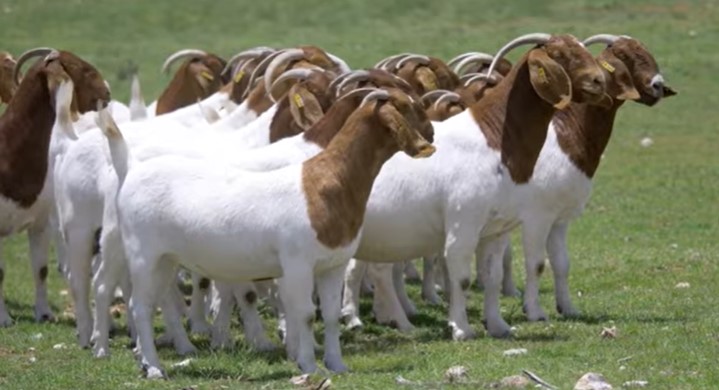
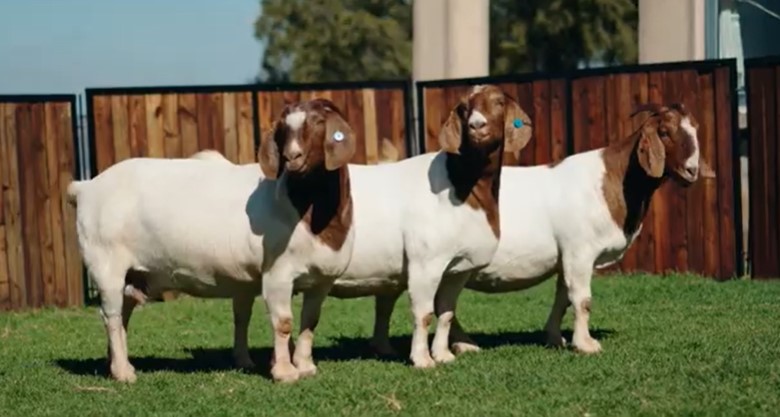
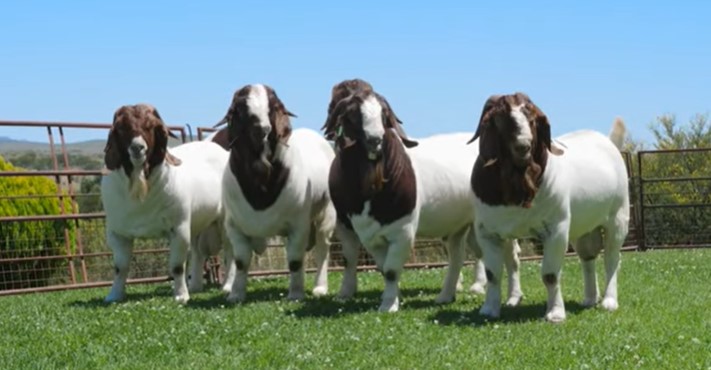
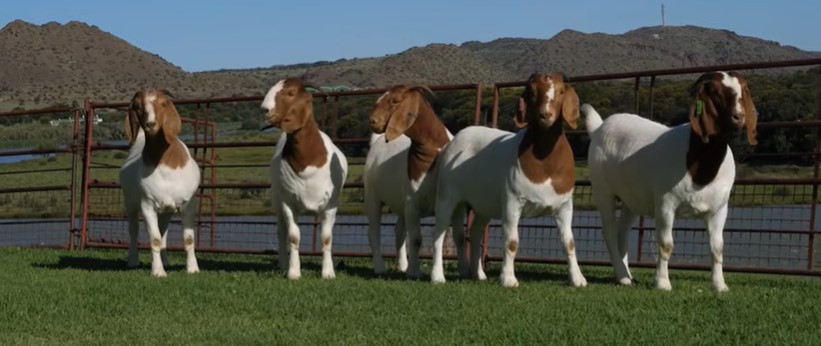
The most distinctive characteristic of the Boer breed is itswhite color that predominates on its bodywith the stain ofred or brownish color that goes from the head through the neck and can reach the shoulders, but there is also an all-red variety of this breed, also known as Kalahari. As a contribution that is not minor, it is a breed ofshiny and short hair.
Has alarge bone structure with well developed muscles, with emphasis on asturdy leg. Males have large, swept-back antlers and females have moderate antlers. There are also those without horns but in theirHigher degree of purity has horns.The Boer breed is known for itslarge compact size and pronounced muscles.
It is avery disease resistant breedand is less susceptible to contamination with internal parasites due to feeding habit. (Let us remember that we can control these parasites throughFamacha Technique).
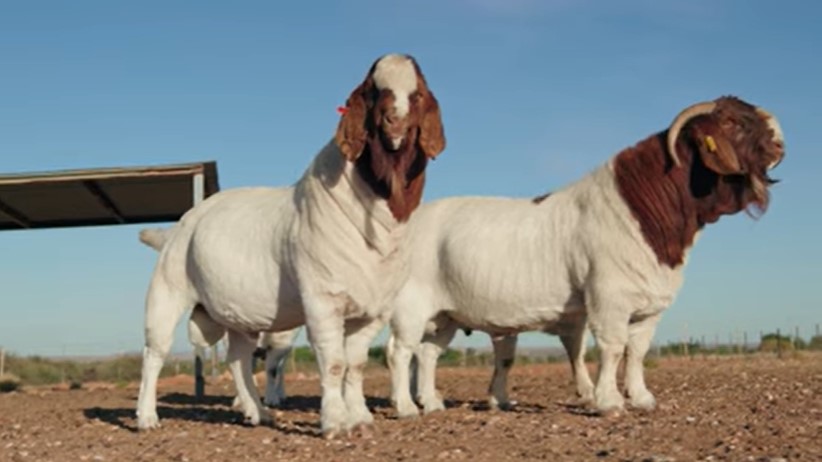
Boer Thorax
The Boer’s chest should be: long, deep and wide.The ribs should be well sprung and pulpy.. The loin should be well muscled, broad and long. The spine should be quite straight and strong.
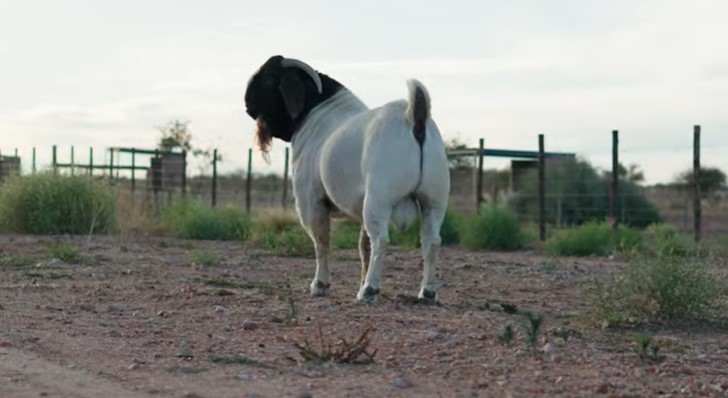
Buttocks, thighs and tail of the Boer
The buttocks and thighs should berounded and corpulent. The tail by birth is short, which allows constant ventilation and in hot climates it works very well againstbug fly. The base of the tail should be centered and straight, the tip can be curved up or to the side. TheHind legs should be strong and have a straight axis from the hip.
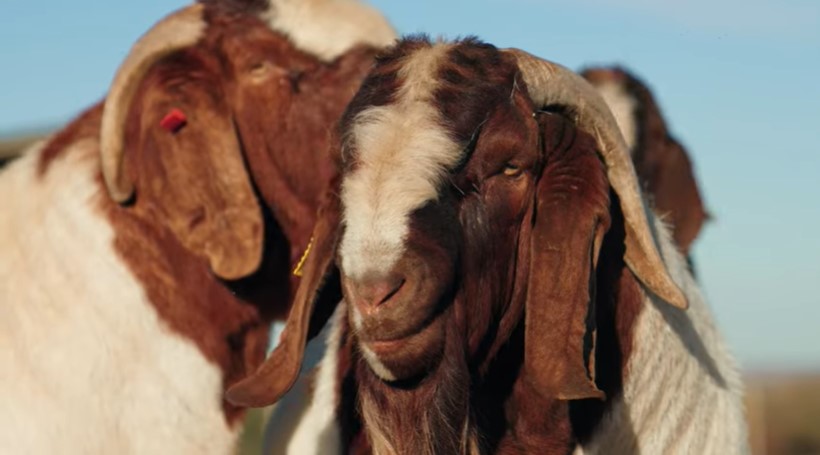
The Boer’s Head
The head is prominent with brown eyes. Thenose has a curvature, also known asroman nose. The mouth is strong with the jaws well set and without any of them protruding. The teeth must be in the proper sequential positions you have. The forehead should be prominent and form a uniform curve that joins the nose and horns. The horns should be dark, round and strong of moderate length and have a gradual posterior curve before turning outwards symmetrically. The ears should be broad, smooth, of medium length and should hang down from the head.
A quick note of some of the phenotypic characteristics of the Boer goat include:
- Size: Boer goats are medium-large in size, with an average weight of 70-135 kg in males and 50-100 kg in females.
- Color: The Boer goat has a predominantly white coat, with brown or dark red spots on the head and limbs.
- Head: The head is wide and well muscled, with a flat forehead and a strong jaw.
- Ears: The ears are medium in size and fall forward.
- horns: Males have large, backward-curving horns, while females may have smaller horns or no horns at all.
- Body: The body is muscular and well proportioned, with a straight back and a wide, rounded rump.
- Hair: The hair is short and straight, which makes it easy to care for the goat.
Boer meat – meat goat breed
The Boer breed is considered one of thebest goat breeds in meat production in the worldfor being themore evaluated and with more records (you can also do it with OvinApp).This breed is characterized by its high-quality butchery ability, tasty and soft on the palate due to thelow levels of intramuscular fat.Which allows us to supply consumers who are looking for red and lean meats.
This breed has managed to stimulate interest on the part of the meat industry in goat meat. This breed is considered the main contribution to increasing goat productivity worldwide.
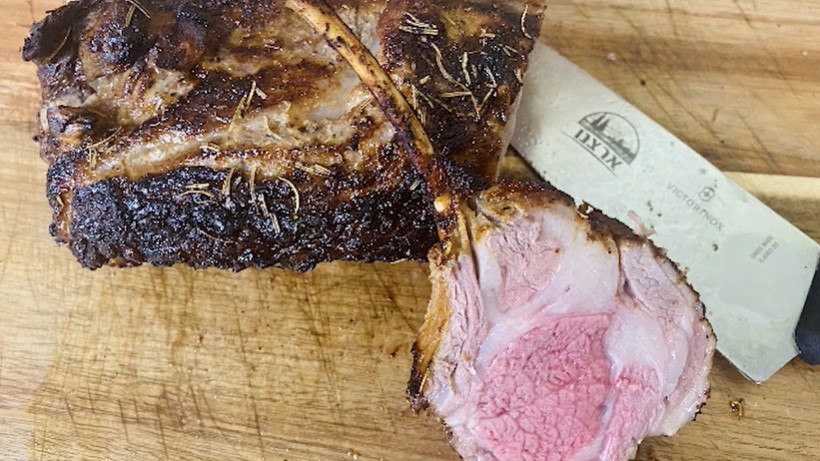
Boer goat meat in a composition of 100 grams of roast meat contains 122 calories (lower in calories than beef, ovine and pork), 23 grams of protein (equally high as beef/bovine), 2.6 grams of fat (the lowest of all meats including poultry which is 3.5 grams) and is the highest in minerals. Therefore comparingboer goat meatWith sheep, bovine, pork and poultry meat we can say that Boer meat iswithout a doubt the healthiest.
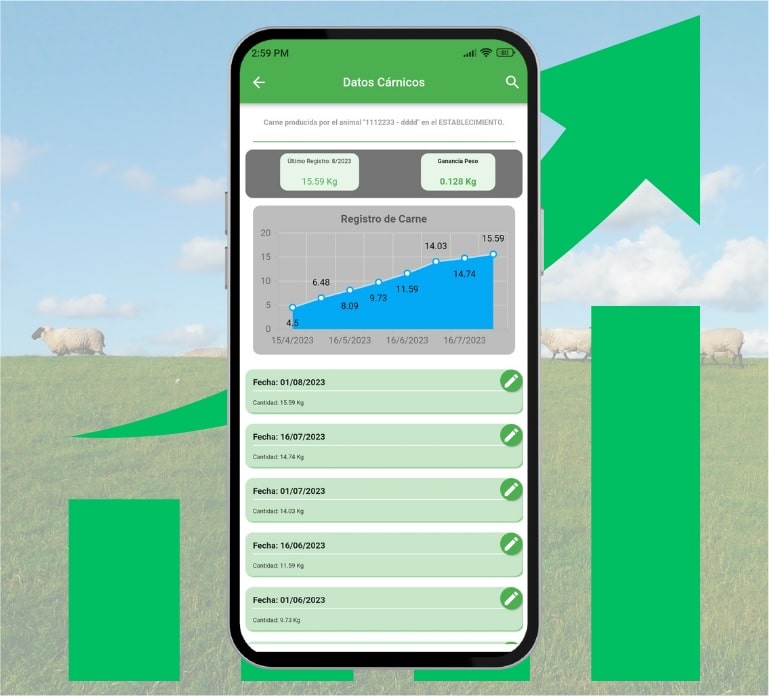
TheDaily weight gain is a key indicator to evaluate the quality of the dietand the health status of the sheep. Through OvinApp,you will be able to meticulously record the data corresponding to each animal, such as your initial and final weight, as well as having detailed monitoring of the different stages of growth and development.
It is recommended that the kids be slaughtered between 4 to 15 months, and the carcass should weigh no more than 23 kg to be able to enjoy healthy, textured and tasty meat.
Much of the current interest in the goat meat sector is focused on the productivity of the pure Boer and not on its crossing through its breeders as a terminal cross. It does not work in the same way as in sheep, although this goat breed could become (hypothesis) the champion of champions pound for pound against sheep breeds such as thetexeleitherdorperbut that comparison will remain for another time. It is said that in 5 years Boer meat will become one of themeatssued aspremiumfor diners looking for a healthy diet.
How many liters of milk does a Boer goat produce?
It is important to note that Boer goats are not a dairy breed, but rather a beef breed. Therefore, its milk production is not its main characteristic and it is expected to produce less milk than breeds specialized in dairy production.
HoweverOn average, their daily milk production is 1.5 liters to 2.5 liters.Although milk production is low, it isvery high quality, which allows the kids to havevery high daily weight gainsOf course, it is advisable to accompany mothers with supplementation.
If you are interested in milk production you can see our article talking aboutHow to ensure high quality milk production in goats.
Boer calves
Goats generally do not have high growth rates compared to sheep but under favorable nutritional conditions, Boer goats produce daily weight gains equal to meat breed sheep.
Hebirth weight (PN) of kids is between 4 to 6.5 kilograms in males and 3.6 to 6.5 kilograms in females.
Heweaning weight(PD) at 90 days in males, it is on average 40 kilograms and in females 33 kilograms.
As for thepesos per yearWe can mention that a Boer male is between 60 to 80 kilograms and females are between 40 to 60 kilograms.
In intensive systems with favorable nutritional administration we can mention that theDaily weight gains exceed the average of 300 grams per day.
Productive characteristics
Boer meat is highly prized for its flavour, softness and high protein content. In addition to meat production, the Boer goat breeds are also used in some countries for milk production, although to a lesser extent. Although they produce milk and of very high quality, it does not produce the volumes of dairy like the Saneen, La Mancha, Alpina breeds, among others.
TheBoer breed is known for its high growth rate and high efficiency in converting feed into meat.Under favorable nutritional conditions, Boer breed animals can have daily weight gains of more than 300 grams and up to 350 grams until weaning.
Reproductive characteristics
Thepuberty in femalesappears among thesix to eight months oldweighing around 30 kg and inmales between six to eight months. The females arevery fertileand with low reproductive seasonality (more extended reproductive season) caused mainly by the photoperiod, they begin their reproductive season after the summer solstice, with a peak of sexual activity in autumn, significantly decreasing their presentation in winter and spring, whichwould allow almost 2 calvings per year.
They have aprolificacy of 1.7 offspring per birth, although it is not uncommon to find goats that have up to three offspring after the first birth. Themultiple births are very common. In summary, in most cases the births of Boer goats produce twins with a quantity of two births per year, which makes it a very productive breed, if not the most productive.
TheBoer goatswhen they reach their reproductive age of six to eight monthscan mount 15 femalesand when they reach theiradulthoodcan ride up to30 females, depending on driving conditions.
Management and accommodation
Due to its size and ability to produce meat, the Boer breed requires proper management and housing to avoid health and welfare problems. It is important to ensure that animals haveaccess to an adequate and sufficient dietand that they be provided with acomfortable, disease-free accommodation. Breeders must also be attentive to the reproductive needs andvaccinate animals to prevent diseases.
Additionally, it is important to keep in mind that, due to their size, theadult males of the Boer breedmay require aspecial handlingto avoid aggressive behavior problems. It is important that breeders are familiar with the needs and behaviors of the Boer breed and that they take the necessary steps toensure the well-being of the animals.
Regarding its goat behavior, unlike other goats that walk feeding for miles a day, without a break in between,Boer goats have short movements with several breaks between each movementwhich in large areas is easy to handle.
Conclusions
Advantages of starting Boer goat production:
- High gaindaily weightin kids.
- No need to shear whythey are hair.
- No need to cut the tail. They are born fromshort tail.
- Excellent formeat production.
- very meathealthy, lean and tasty.
- 3.5 births per year.
- Multiple births.
- Disease resistantwhich translates into less spending on medications.
As you can seemany of its advantages reduce costs and physical work timesthat can be invested inmeasure and evaluate our production through records.
In conclusion, the Boer breed is a goat breed native to South Africa known for its large size and ability to produce high-quality meat. It is a breed with great adaptability to different climates and high resistance to hot climates, as well as a great reproductive capacity.
It is important that breeders are familiar with the needs and behaviors of this breed to ensure the well-being of the animals and obtain optimal production. If you decide to breed this breed, you will not regret its productive results.
If you want to become professionalin your sheep and goat production remember that you candownload OvinAppin a wayfreeand try all the functionalities of the application at no cost (up to 10 animals) and thus have your sheep and goat farm100% technical on your cell phone, learn from yourrecordsand sogenerate more valuein your animals andmaximize your profitability.
If you want to see a comparison between different types of goats, we leave you the following link to our comparison betweenBoer vs Savanna vs Kiko.

You can download OvinApp from the Apple Store or from Google Play, depending on the device you have, by clicking on the following images.


If you want to learn how to use all the tools it offers youOvinApp?
- Follow the following link if you want to knowhow to create your first sheep or goat in OvinApp.
- Do you want to find out a little more abouthow to control and manage sheep production with OvinApp.
- You can also click on the WhatsApp button and contact us.
You can see ourYouTube Channelwhere we explain thestep by stephow to start your journey withOvinApp!
You can alsofollow OvinApp on Facebook,OvinApp on YoutubeandOvinApp on Instagram.