

Merino Sheep: Characteristics, Fine Wool and Worldwide Distribution
abril 6, 2026
FAMACHA Method in Sheep and Goats: What It Is and How to Use It
abril 6, 2026If you notice cloudy, white, blue or opaque eyes in sheep or goats in your flock, you should take it seriously. While some causes are mild and resolve quickly with treatment, others can lead to permanent blindness or indicate serious systemic disease. This guide will help you identify the most common causes of eye clouding in sheep and take the right action.
Why Do Sheep Eyes Turn Cloudy or Blue?
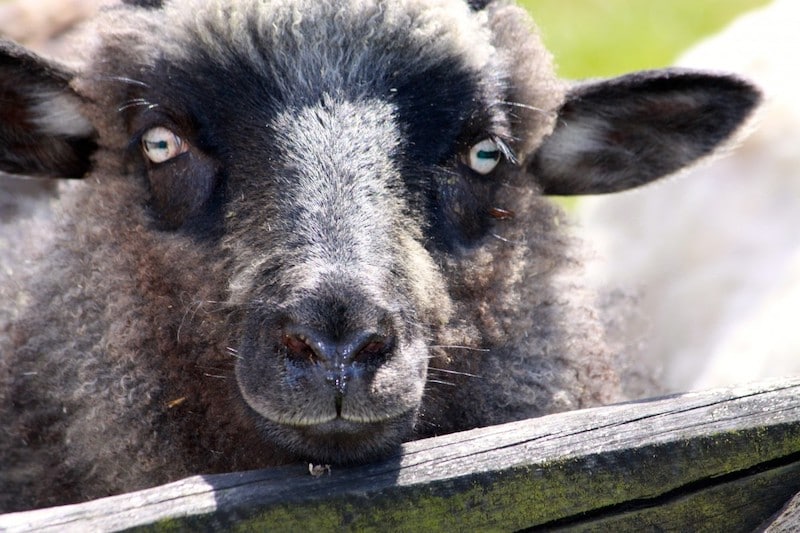
The cloudiness you see in an affected eye is caused by corneal edema (fluid accumulation in the cornea) or corneal opacity (scarring or inflammation). Different conditions cause this through different mechanisms. The most common causes are:
- Infectious keratoconjunctivitis (pink eye / contagious ophthalmia)
- Infectious uveitis (iritis)
- Vitamin A deficiency
- Foreign body or trauma
- Listeriosis (circling disease)
- Polioencephalomalacia (thiamine deficiency)
1. Infectious Keratoconjunctivitis (Pink Eye)
Infectious keratoconjunctivitis (IKC) is the most common cause of eye problems in sheep. It is a highly contagious disease causing inflammation of the cornea (keratitis) and conjunctiva (conjunctivitis).
Causative Agents
- Mycoplasma conjunctivae: The primary pathogen in most countries
- Chlamydophila pecorum: Common in some regions, also causes arthritis and reproductive problems
- Moraxella ovis: Less common but documented in some outbreaks
Symptoms (progressive stages)
- Stage 1 (mild): Excessive tearing, conjunctival redness, blepharospasm (squinting)
- Stage 2 (moderate): Corneal cloudiness begins at the edges and moves toward the center. Thick mucopurulent discharge. Animal keeps eye partially closed.
- Stage 3 (severe): Complete corneal opacity — the entire eye appears white or blue-white. Temporary or permanent blindness.
- Stage 4 (recovery or deterioration): If treated, opacity recedes from center toward edges over 2–4 weeks. If untreated, may lead to corneal ulceration or permanent scarring.
IKC spreads rapidly through a flock — transmitted by direct contact, flies, and shared feeding equipment. Outbreaks are most common in summer when flies are active and animals are crowded.
Treatment
- Oxytetracycline eye ointment: Apply 3 times daily for 5 days — first-line treatment for IKC
- Systemic oxytetracycline (injectable): Single long-acting injection (20 mg/kg) — more practical for large flocks where individual eye treatment is difficult
- Penicillin or tylosin: Alternatives when oxytetracycline is not available
- Anti-inflammatory (meloxicam): Reduces pain and speeds recovery
- Eye patch: Temporary bandaging protects the affected eye from sunlight and flies and reduces self-trauma
2. Infectious Uveitis (Iritis)
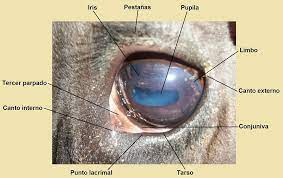
Uveitis (inflammation of the uvea — the middle layer of the eye) causes a characteristic deep blue or blue-grey opacity of the eye, often accompanied by a dilated or irregular pupil. In sheep, infectious uveitis is most commonly associated with:
- Listeria monocytogenes: Causes encephalitis («circling disease») and/or uveitis. Typically associated with silage feeding.
- Brucella ovis: Can cause uveitis as part of systemic brucellosis
- Leptospirosis: Occasional cause in some regions
- Trauma: Blunt trauma can cause traumatic uveitis without infection
Uveitis presents differently from IKC: the cloudiness is deeper (involves the anterior chamber, not just the cornea), the pupil may be irregular or non-responsive to light, and systemic signs (fever, neurological signs) may be present.
3. Vitamin A Deficiency
Severe vitamin A deficiency can cause night blindness and eventually permanent blindness in sheep, particularly:
- Animals on dry, bleached pasture or dry hay for extended periods (vitamin A precursors are destroyed in dried forage)
- Young lambs whose dams were vitamin A deficient
- Animals in drought-affected areas with no access to green feed
Signs include night blindness (bumping into things in low light), watering eyes and eventually cloudy eyes. Treat with vitamin A injection (50,000–100,000 IU/animal) and provide access to green feed.
4. Foreign Body or Trauma
Grass seeds, hay awns, dust and debris can lodge in the conjunctival sac and scratch the cornea, causing corneal ulceration and subsequent cloudiness. A single affected eye with sudden onset suggests foreign body or trauma rather than infectious disease.
Inspect the eye carefully — gently evert the eyelid to look for foreign material. Irrigate with saline to remove debris. Treat corneal ulcers with antibiotic eye ointment to prevent secondary infection.
Prevention of Eye Disease in Sheep
- Fly control: Face flies are major vectors of IKC — reduce fly pressure with pour-on insecticides and fly traps during summer
- Avoid overcrowding: Reduces pathogen transmission between animals
- Vaccination: Vaccines against Mycoplasma conjunctivae and Chlamydophila are available in some countries
- Isolate affected animals: Remove IKC cases from the flock immediately to reduce spread
- Vitamin A supplementation: Supplement in drought years or when animals are on poor dry feed for extended periods
- Silage quality: Avoid feeding poorly fermented silage (listeriosis risk)
- Clean feeding equipment: Reduce pathogen transfer via shared troughs and feeders
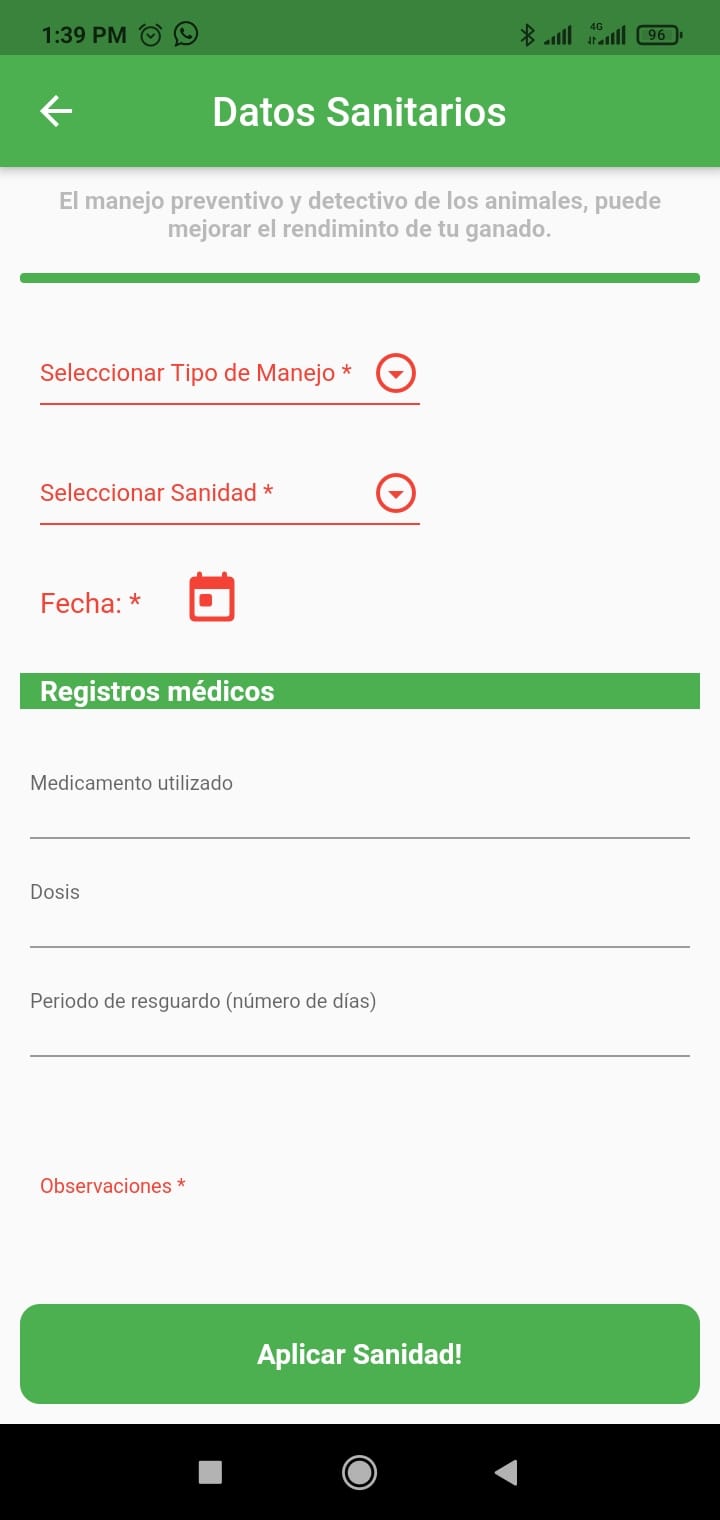
Recording eye disease events, treatment responses and affected animals in OvinApp helps you track whether IKC is recurring in specific animals (which may be persistently infected carriers or genetically susceptible), evaluate your control program, and ensure all affected animals receive complete treatment.