

Cloudy or Blue Eyes in Sheep: Causes, Treatment and Prevention
abril 6, 2026
Ovelha Dorper: Características, Vantagens e Produção de Carne
abril 6, 2026
The FAMACHA method is one of the most important advances in small ruminant parasite management in recent decades. It is a practical, low-cost tool that allows producers to identify which individual animals in a flock need anthelmintic treatment — and which do not — based on the degree of anemia caused by Haemonchus contortus, the most economically damaging internal parasite in sheep and goats worldwide.

What Is Haemonchus contortus and Why Does It Matter?
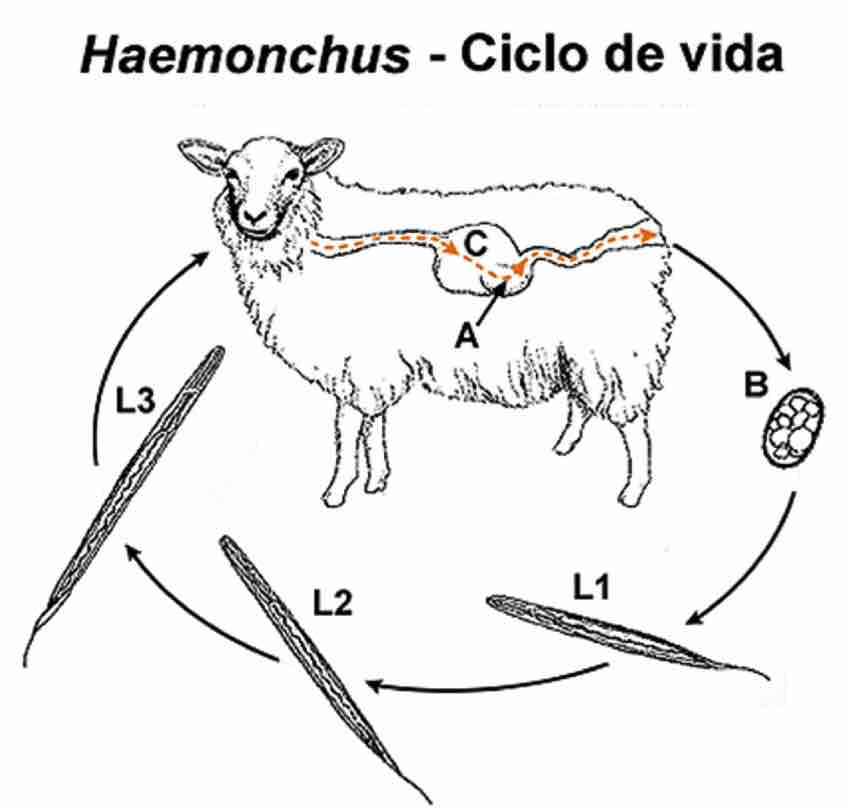
Haemonchus contortus — commonly called the barber pole worm or wireworm — is a blood-sucking nematode that lives in the abomasum (true stomach) of sheep and goats. It is the most pathogenic and economically significant parasite in small ruminants in warm, humid climates.
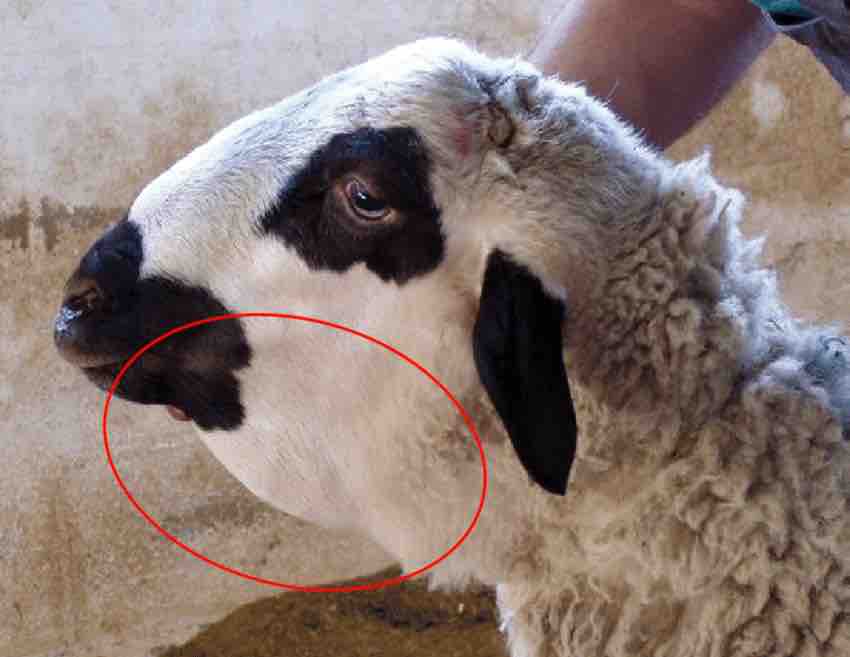
A single female adult worm can lay 5,000–10,000 eggs per day. A heavily infected animal can harbor thousands of worms, each sucking blood — causing severe anemia, weakness, bottle jaw (submandibular edema) and death if untreated.
The traditional response — blanket treating the entire flock at regular intervals — has created widespread anthelmintic resistance in Haemonchus populations worldwide, to the point where multiple drug classes are ineffective in many flocks. New strategies are urgently needed.
What Is the FAMACHA Method?
FAMACHA (an acronym from «FAM-Ach-A» — referring to the system’s developer, Dr. Francois Malan, and collaborators in South Africa) is a targeted selective treatment (TST) system based on assessing the color of an animal’s conjunctival mucous membrane (the inner eyelid) as an indicator of anemia level.
The principle is simple:
- Haemonchus causes blood loss → anemia → pale mucous membranes
- By evaluating the color of the conjunctiva against a standardized color card (the FAMACHA card), the producer can estimate how anemic the animal is
- Only anemic animals (FAMACHA scores 3, 4 or 5) are treated
- Non-anemic animals (scores 1 and 2) are not treated — they are in «refugia» (harboring susceptible worms in their gut)
- Maintaining a refugia population slows the development of anthelmintic resistance
The FAMACHA Scoring Scale
The FAMACHA card shows 5 colored eye images corresponding to 5 anemia levels:
- Score 1 (Red/Pink): Healthy — no anemia. No treatment needed.
- Score 2 (Pink): Not anemic — no treatment needed under most conditions.
- Score 3 (Pale Pink): Mildly anemic — may or may not require treatment depending on clinical condition, weight loss, and management context. Borderline case.
- Score 4 (Pink-White): Anemic — treatment recommended. Animal showing signs of Haemonchus burden.
- Score 5 (White): Severely anemic — treatment urgently required. High risk of death without intervention.
As a general rule: treat animals scoring 3, 4 or 5; do not treat animals scoring 1 or 2. Some systems treat only 4 and 5 to further reduce treatment frequency.
How to Perform a FAMACHA Assessment
- Restrain the animal gently — avoid excessive stress which can temporarily change membrane color
- Use good natural light or a headlamp — do not assess in dim light or direct harsh sunlight
- Gently pull the lower eyelid downward with your thumb to expose the inner conjunctival surface
- Compare the pink to red color of the mucous membrane to the FAMACHA card held next to the eye
- Score the animal (1–5) and record the score
- Release the animal and move to the next
Important notes: FAMACHA is specific to Haemonchus contortus. It does not assess other parasites (Ostertagia, Trichostrongylus, coccidia) and should not be used as the sole parasite management tool in regions where other species predominate. It also does not assess the worm burden in non-anemia-causing parasites.
Benefits of the FAMACHA Method
- Reduces anthelmintic use by 50–80% in most flocks — major cost savings
- Slows anthelmintic resistance development by maintaining refugia population
- Identifies animals that are genetically susceptible to parasites (animals repeatedly scoring 3–5 should be culled from the breeding program)
- No specialized equipment needed — just the FAMACHA card and training
- Applicable in the field during normal handling procedures
Getting FAMACHA Certified
FAMACHA is a standardized system — to use it correctly, producers should complete a FAMACHA training workshop taught by a certified trainer. These workshops are available through:
- State Cooperative Extension programs in the USA
- Veterinary schools and livestock research centers in South America, South Africa, Australia and Europe
- Some livestock breed associations offer training
Producers who complete training receive an official FAMACHA card and certification. Only use the official card — printed versions or phone screen comparisons are less accurate.
Implementing FAMACHA in Your Management Program
- Assess all animals every 4–6 weeks during the high-risk period (warm, wet months when larval populations on pasture peak)
- Combine FAMACHA with body condition scoring and fecal egg counts for a more complete picture
- Record all scores — animals repeatedly scoring 3–5 are candidates for culling
- Calculate your flock’s treatment rate after each assessment — if more than 20–25% of animals require treatment, investigate why (overcrowding, pasture management, genetics)
OvinApp allows you to record FAMACHA scores for individual animals at each assessment, track which animals are repeatedly treated, and generate reports showing the evolution of parasite pressure in your flock over time — making your parasite management data-driven and much more effective.